October 1, 2026

Social care institutions contracted with the Ministry of Social Affairs are facing a worsening financial and operational crisis, amid warnings that the continued delay in payment of dues may force these institutions to reduce their services or resort to escalatory steps, which threatens to have direct and serious repercussions on thousands of beneficiaries and their families in various Lebanese regions.
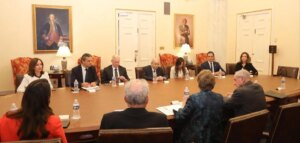
In this context, the Minister of Social Affairs, Haneen Al-Sayed, held an expanded meeting with a delegation representing associations and social institutions contracting with the Ministry, in the presence of Noura Jumblatt. The delegation included representatives of: SESOBEL, Al-Mabarrat Charity Association, the Islamic Orphanage, Al-Rahma Foundation in Tripoli, the SCALE Foundation, the Friends of the Disabled Association in Al-Mushrif, the Lebanese Society for the Care of the Disabled in Sarafand, and the Father Roberts Foundation.
The meeting addressed the serious challenges facing care institutions as a result of delayed financial dues, which threaten their ability to continue providing vital services to people with disabilities, children, orphans, the elderly, and other groups most in need that constitute a basic pillar of Lebanon’s social protection network.
During the meeting, representatives of the institutions presented a financial and operational reality that they described as “extremely difficult,” noting that delaying the payment of dues, in conjunction with the high costs of care and employment and the accumulation of obligations towards workers and suppliers, directly threatens their continuity. They stressed that they continued to fulfill their mission during the most difficult years, including periods of war and economic crises, but their ability to tolerate further delays had run out, warning that the continuation of the current situation may push some institutions towards escalatory steps or reducing services.
For her part, Minister Haneen Al-Sayyed stressed that the state’s social responsibility begins with the neediest and poorest groups, stressing that the Ministry and partner institutions share the same goal of protecting the rights of the most vulnerable groups and ensuring continuity of care for them. She explained that she is following the receivables file with great interest with the concerned authorities to push towards giving payment of arrears the highest priority, stressing that any financial treatment must start from the realization that behind every late receivable is an institution struggling to maintain its employees and services, and behind every service is a human being, whether a child, a person with a disability, an elderly person, or a family that depends entirely on it.
At the conclusion of the meeting, it was agreed that these deliberations would form the basis for practical steps in the next stage, especially in light of the upcoming meeting of institutions with the Minister of Finance, Yassin Jaber, whose results will be built on to determine the next path to address the receivables crisis and ensure the sustainability of services.
For its part, the Ministry of Social Affairs affirmed its commitment to continue keeping pace with this file and effective coordination with institutions, ministries and concerned authorities, based on the firm conviction that the financial and administrative crisis should not, under any circumstances, cause an interruption of care for the groups most in need of it.