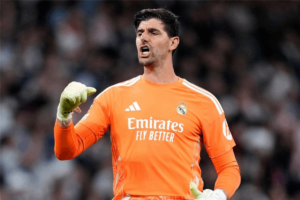
The 2026 World Cup ended with one champion being crowned, but it opened a market that benefited hundreds of players. What the player presented within weeks in front of a global audience quickly turned into contracts and deals that raised club spending to a record level.
According to FIFA’s report on international transfers between June 1 and September 2, 267 players from 47 nationalities who participated in the World Cup moved to new clubs, and the total value of their deals amounted to more than $3.3 billion. This figure represents more than a third of global spending on men’s transfers during the same window, amounting to $9.89 billion.
The numbers confirm that the World Cup is no longer a tournament for national teams only, but rather the largest open exhibition for the “selling” of players. A player who needs a full season to prove himself with his club can, in five or six international matches, raise his value and bring new clubs into the race for him.
English clubs topped the spending with more than 3.02 billion dollars, followed by Italian clubs with 1.1 billion, then Spain with 940 million and Germany with 904 million. As for the French clubs, they were the biggest beneficiaries of the sale, after receiving about $1.7 billion.
One of the most prominent deals is the transfer of Argentine Enzo Fernandez from Chelsea to Manchester City for 125 million pounds sterling, after his participation in Argentina reaching the final of the tournament. He became the first player whose transfer value exceeded 100 million pounds twice during his career.
But shining in a short tournament does not guarantee success with the club. Some deals are paid under the pressure of competition and the fear of losing the player, not based on the evaluation of an entire season.
The World Cup does not only create stars; It re-prices them. With its player deals reaching $3.3 billion, the tournament has become a global market where negotiations begin before the celebrations end.