“Lebanon Debate” – Dr. Riad Asaad Hilal
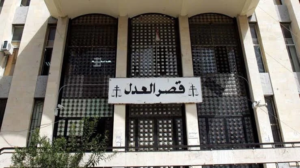
Days before the arrival of the Emirati economic delegation headed by the Minister of Foreign Trade, Dr. Thani bin Ahmed Al Zeyoudi, the name of Emirati businessman Khalaf Al Habtoor returned to the forefront of the Lebanese debate, after a comment by writer and political analyst Nidal Al Sabaa in which he called for addressing the Al Habtoor issue, considering that providing guarantees to the Gulf investor begins with protecting his rights, and that this issue constitutes a serious test of the extent of Lebanon’s readiness to restore Arab confidence.
Raising this file at this time is not a passing detail. The upcoming visit, which includes dozens of prominent Emirati businessmen, carries with it a political and economic message that Abu Dhabi still views Lebanon as a destination that can regain part of its investment role if the appropriate environment is available. However, this message collides with a question more complex than any investment project: Can Lebanon address the issue of one investor, while the entire financial system is still awaiting its reorganization?
At its core, Khalaf Al Habtoor’s case is inseparable from the Lebanese financial crisis. If the dispute concerns funds or rights affected by the collapse of the banking sector, then its treatment is logically linked to the legislative framework that is supposed to regulate the rights of all depositors and investors, that is, the financial regulation and banking sector restructuring law. Therefore, any solution that deviates from this framework raises legal and political questions that are no less important than the issue itself.
Theoretically, three paths can be envisioned.
The first path is to grant Al Habtoor special treatment, based on considerations related to the importance of Lebanese-Emirati relations, or the desire to send a message of reassurance to Gulf investors. This option may seem attractive in the short term, because it may contribute to improving the investment climate and encourage Arab capital to reconsider the Lebanese market.
However, this path carries great risks. If one investor obtains his rights outside the framework of the general solution, how will the state justify to Lebanese depositors their continued wait for years? How can thousands of other investors be convinced that equality before the law still exists? The exception, whatever its justification, may become a precedent that is difficult to contain.
As for the second path, it is based on linking Al Habtoor’s case to the comprehensive solution, so that it is subject to the same mechanisms that will be applied to the rest of the depositors and creditors after the adoption of the financial regulation law. This option seems more consistent with the principle of equality and the rule of law, but it carries an economic and political cost, because it leaves Gulf investors facing a legislative landscape that is not yet complete, and postpones the provision of any practical message about improving the investment environment.
The third path remains, which is the most realistic in the eyes of many, and is to search for a legal settlement that does not appear exceptional in form, but gives Al Habtoor guarantees or different solutions in content. In other words, there is no special text in his name, but legal, judicial or contractual tools are used that practically lead to his file being processed faster than the rest of the files.
But even this option is not without problems. Investors do not measure the attractiveness of countries by their ability to solve one issue, but rather by their ability to build stable rules that apply to everyone. Trust is not restored through individual settlements, but rather through a clear legal system whose results any investor can predict in advance.
Hence, the Al Habtoor case went beyond an individual dispute between an investor and Lebanese parties, to become a test of the state’s ability to reconcile its urgent need to restore Arab investment, and its commitment to the principle of justice and equality before the law.
The Emirati delegation arriving in Beirut will not only monitor the fate of Khalaf Al Habtoor’s case, but will also monitor how the Lebanese state is managing this file. The investor not only asks whether Al Habtoor’s rights will be protected, but also: If I invest in Lebanon today, what rules will govern my relationship with the country if I face a similar crisis in the future?
Here lies the paradox. Lebanon needs the Gulf investor more than ever, but it equally needs to restore the credibility of its legal and financial institutions. If the Al Habtoor case is addressed outside the framework of general reforms, it may achieve an immediate gain, but it may raise broader questions about the fairness of the system. However, if it is postponed completely until the financial regulation law is passed, it may be seen as further evidence of the slowness of reform and the state’s inability to provide practical solutions.
Therefore, the real question today does not seem: Will the case of Khalaf Al Habtoor be resolved?
Rather: Can Lebanon reassure Gulf investors by resolving an individual case, while the legal framework that regulates the rights of all investors and depositors is still absent?
The answer to this question may be the most important outcome of the UAE delegation’s visit, because it will not only determine the fate of one issue, but will also shape Lebanon’s investment image in the next stage.