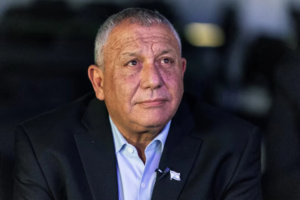
Prince Harry, singer Elton John and five other plaintiffs suffered a heavy legal and financial blow in Britain, after the Supreme Court in London ordered them to pay 9.54 million pounds sterling, or about 13 million dollars, as an initial installment of the legal costs of Associated Newspapers, the publisher of the Daily Mail and Mail on Sunday newspapers, after losing a case in which they accused the group of using illegal means to collect information about their private lives.
Judge Matthew Nicklin issued the decision on Friday, weeks after he ruled to dismiss the main lawsuit brought by Harry, Elton John, David Furnish, Elizabeth Hurley, Sadie Frost, Doreen Lawrence and Simon Hughes against the press group.
The decision does not mean that Prince Harry alone is required to pay the full amount of 9.54 million pounds sterling. Rather, the amount is imposed on the seven plaintiffs collectively as an initial payment at the expense of the legal costs incurred by the defendant company.
The judge decided to calculate costs on the basis of “full compensation,” a standard that could lead to the losing party bearing a high percentage of the other party’s legal expenses, after criticizing the way the plaintiffs managed the case.
Nicklin described the plaintiffs’ behavior during litigation as “highly unreasonable,” considering that they made broad accusations, some of which were based on inference and assumption, without sufficient evidence linking the specific facts they complained about to illegal information gathering operations.
Associated Newspapers had announced that its total legal expenses in the case amounted to about 34.5 million pounds sterling, or approximately 45.8 million dollars, while the latest ruling opens the door to an additional battle to determine the final amount that the plaintiffs will bear after a full audit of the costs.
According to what was announced during previous hearings, the plaintiffs had insurance coverage of about 16 million pounds sterling, raising the possibility that they would have to bear part of the cost out of their own pockets if the final amount exceeds the limits of available insurance.
A spokesman for Associated Newspapers described the decision as “another overwhelming victory” for the group and its workers, while its lawyer, Anthony White, said that prosecutors had made serious accusations without providing enough evidence to prove them, and he directed particular criticism at Harry because of the prominent role he played in the legal confrontation.
On the other hand, the plaintiffs’ lawyer, Nicholas Bacon, objected to the amount of expenses announced by the company, considering that the amount of 34.5 million pounds is “extremely high” and greatly exceeds the legal budget that was expected for the case.
The roots of the lawsuit go back to accusations made by Harry and the rest of the plaintiffs that journalists and private investigators working for Associated Newspapers used illegal means to obtain private information, including intercepting communications, obtaining financial and medical data, and using deception to obtain confidential information.
Prosecutors had also accused the group of using private investigators and surveillance methods, spying on communications, and obtaining personal information from confidential sources, allegations that the company categorically denied from the beginning of the case.
After a trial that lasted about 11 weeks, Nicklen issued a ruling last July 7 dismissing all claims, considering that the plaintiffs failed to prove that the articles and the specific facts they objected to were actually based on illegal means of gathering information.
The case included 57 articles or media incidents and about 97 separate allegations, but the court adopted an approach that requires the plaintiffs to prove the existence of a specific link between each journalistic article and an illegal means of collecting information, rather than relying solely on the existence of an assumed general pattern of practices within the group.
Although the case was dismissed, the judge acknowledged in the background that “Associated Newspapers” had in the past used private investigators, and that some of them had engaged in methods that included obtaining information by deception, but he concluded that this alone was not sufficient to prove that the material at issue in the current case was the result of illegal practices.
The result represents a significant setback for Harry in his long battle with the British tabloid press, especially since he has achieved different results in other cases against rival media groups.
In December 2023, Harry won part of his lawsuit against Mirror Group Newspapers, after the court concluded that he had been subjected to illegal information gathering in a number of cases, and received compensation amounting to 140,600 pounds sterling.
In January 2025, Harry ended another dispute with News Group Newspapers, publisher of The Sun and the former News of the World, with a settlement agreement that included a public apology for “serious interference” in his private life and the payment of significant financial compensation.
But the lawsuit against Associated Newspapers took a complete opposite course, as the company chose to go to trial to the end and reject the charges, before the court issued a ruling dismissing them all.
A hearing on July 29 early revealed the extent of the financial risk facing the plaintiffs, when the company demanded an initial payment of 10 million pounds of its legal costs, amid warnings that the final bill could reach tens of millions.
The case gains importance beyond Harry and the rest of the famous figures, because it comes in the context of disputes that have spanned years over the methods of the British tabloid press in collecting information, since the phone hacking scandal that led to the closure of the News of the World newspaper in 2011 and launched the “Leveson” investigation into the culture and practices of the British press.
Most of the previous disputes related to the illegal collection of information targeted the Mirror and News Group, while the latest case represented one of the most prominent times that Associated Newspapers has faced charges of this magnitude in court.
Thus, Harry’s battle with the Daily Mail moves from the stage of proving the alleged violations to a battle of numbers, as the issue is no longer just about losing the lawsuit, but also about the size of the bill that the plaintiffs will have to pay, at a time when the legal expenses announced by the company exceeded 34 million pounds sterling, making the file one of the most expensive British media disputes in recent years.