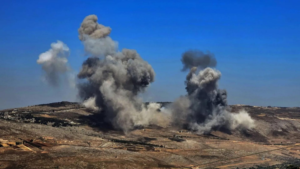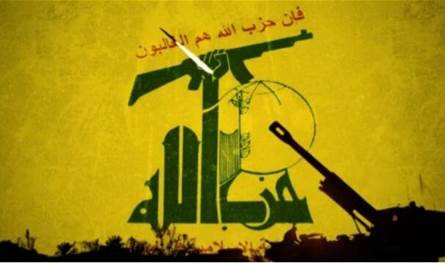
A whole year has passed since the Israeli war erupted on Lebanon, a year characterized by destruction, displacement and attrition, but also proved that the balances were not broken despite the harsh strikes and qualitative assassinations that affected the leadership of Hezbollah and at the forefront of the Secretary -General Hassan Nasrallah. What makes the current moment more symbolic is that Lebanon stands on the threshold of the first anniversary of the assassination of the man who formed the most prominent face decades of the resistance, at a time when developments accelerate towards benefits that may draw the features of the next stage, especially since the agreement to stop the hostilities that Lebanon committed was struck by Israel.
The assassination of Mr. Nasrallah was not an ordinary event in the context of the war. However, Hezbollah was quick to contain the repercussions through an organized transfer of leadership, and Sheikh Naim Qasim emerged as a new general secretary, based on the internal legitimacy provided by the organizational consensus, and the legitimacy of the street that was strengthened by the speed of appearance and confident discourse. This workshop is led by Sheikh Qasim, and includes a comprehensive review of the media, political, military and security structure, in addition to other organizational aspects, and its aim is to enhance the party’s presence and fortify its position in the face of the upcoming entitlements, as well as restoring bridges with the allies. Since his appointment as a general secretary, Qasim was keen to combine his speech between adhering to the option of the place. With a more direct political tone, in which he called for opening a new page with Saudi Arabia and cooperating with the Lebanese opponents to avoid providing a free service to Israel, but returning with memory to before the assassination reveals that Sayyid Nasrallah himself had started a deep intellectual process that exceeded the limits of the military. The military bargaining to approach the state project. On February 22, Representative Ali Fayyad published an article in the “Al -Akhbar newspaper” entitled Al -Sayed, the Resistance and the State, in which he indicated that Sayyid Nasrallah had spoken before the Syrian crisis a document entitled towards a capable and fair state, which included a comprehensive vision to reform the Lebanese regime, but the circumstances prevented its declaration. At a later stage, the party’s Shura declared its final adoption of the statement of Lebanon, a final homeland for all its sons, restoring the speech of Imam Musa al -Sadr and then it was mentioned in the Taif Agreement, before it turned into a text in the Lebanese constitution. This development in approaches reflects a gradual trend towards stabilizing the party’s identity as part of the Lebanese entity, not outside it, and if the weapon remains the basic point of contrast. Today, a year after the war and a few days separating us from the first anniversary of the assassination of Sayyid Nasrallah, Hezbollah appears to be in front of a complex dilemma, it is on the one hand that adheres to its weapon as the only guarantee in the face of Israel, and on the other hand facing pressure and international pressure It demands the exclusive weapon in the hands of the state as a condition for any settlement. Here, Sheikh Qassem’s recent speeches intersect with that postponed vision of Mr. Nasrallah, which is related to talking about the construction of the state, reforming the system, participating in the ruling, but always from the location of competence, not from the waiver. The year of war proved that the compromise is still able to withstand, but the assassination of Sayyid Nasrallah opened a deeper question about the party’s future in the absence of its historical symbol. The first anniversary of its assassination is not just an emotional station, but rather a political occasion that draws the limits of the upcoming transformations. Will the party continue to combine weapons and politics as established by Sayyid Nasrallah and Sheikh Qassem goes on to dedicate it, or is the upcoming entitlements to impose a new formulation of the relationship of the head. Staying between the state, between a postponed project for the fair state document and escalating pressures for the establishment of a lady state on its soil? Some followers believe that the main challenge before the party is to take a calm strategic shift, through which it gradually moves to the location of the pure Lebanese political power, based on its legitimacy to its popular balance and its historical experience more than its weapon.
The post The party’s path after a year of war … between the compromise and the construction of the state appeared first on 961 tobay Lebanon today.