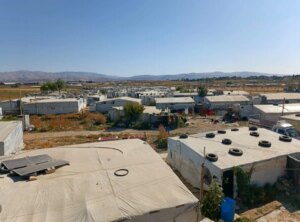
The proposal of the American envoy Thomas Barak was not a plan to create a “economic zone” in southern Lebanon, just a technical proposal linking reconstruction and calm. The plan, as revealed by American sources of Axius, carries in essence an attempt to open a new page entitled to disarm Hizbullah in exchange for an Israeli gradual withdrawal and the flow of Arab and international investments to the south. But the way to this ideal equation is fraught with profound contradictions that make it closer to a complicated political test than an implementable agreement. The United States seems to be convinced that the government’s decision to attempt to disarm the party, even gradually, represents a historical development that deserves to be built on. Hence its request from Israel to reduce the air strikes and express preparation for the withdrawal from the five sites that it still occupies in the south, but Israel reads the scene with a different logic, as it is ready to give Washington a diplomatic opportunity, but it keeps its hand on the trigger, and waars that any calm will be fully conditional on its security and political interests. The strikes carried out on Wednesday on the south were not just a routine military operation, but rather a clear political message that any withdrawal or decline will only take place according to strict Israeli conditions.
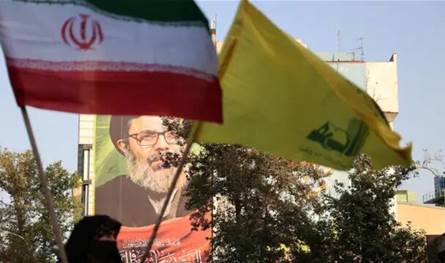
On the other hand, the visit of the Secretary of the Supreme Council of National Security in Iran, Ali Larijani, to Beirut, which preceded the visit of Barak, to remember everyone that any project targeting Hizbullah will not pass without an Iranian account. Larijani carried, according to sources familiar with the Iranian position, a double message. On the one hand, he confirmed that Tehran respects Lebanon’s sovereignty and does not intend to interfere in its internal decisions; On the other hand, he stressed that Iran will not leave the party alone in front of any Israeli or terrorist threat, and that any systematic attempt to eliminate it will require direct intervention, as Larijani has informed the President of the Republic, General Joseph Aoun, explicitly that Iran will not interfere in the Lebanese sovereign affairs, but it will stand by Hizbullah if the United States or Israel intervened again. He was conveyed to Prime Minister Nawaf Salam the same position, adding that the interference of the Syrian transitional President Ahmed al -Shara Abu Muhammad al -Jolani or the groups associated with it will in turn call for an Iranian response. With this, Larijani drew a regional red line that Lebanon is capable of negotiating internally, and that America can propose economic alternatives, but the survival of Hizbullah outside the circle of existential targeting remains an Iranian condition that is not discussed. On this background, Hizbullah shows a clear caution from the Park Park approved by the government, considering it as a coup against the Taif Agreement and the constitution. It is assumed that its implementation will begin early next month, according to the plan that General Rudolph Haykal will present at the Cabinet table. This caution is due, not only to the content of the paper, but to the party’s awareness that practical implementation will put the army in a direct confrontation with the file of weapons, which may open the door to internal, unaccounted for internal tension. Informed sources indicate that coordination between the army and Hezbollah is still close, and it is described in the Hizbullah councils as more than excellent. Rather, it confirms that the last meeting between the official of the unit of correlation and coordination in the party, Hajj Wafik Safa, and the commander of the army, led to understandings about many of the problems raised regarding the inventory of weapons. It is likely that the army commander in his upcoming intervention before the Council of Ministers will indicate the urgent need to secure several and many before proceeding to any executive step. Such a situation, if it adopts it, may give the government a justification for postponing the decision in practice, and throwing the ball again at its stadium away from the military establishment. It is noteworthy that the issue of supporting the army was an essential axis in the meeting of the American envoy with the army commander, which reflects Washington’s bet on the military as a tool to implement its plan. However, what appears so far is that the army itself tends to wait, realizing that engaging in this file without sufficient ingredients may put it in the heart of a political and security battle that exceeds its capabilities.
The post Iran determines the ceiling of intervention: Hzel will not leave alone appeared first on 961 tobay Lebanon today.