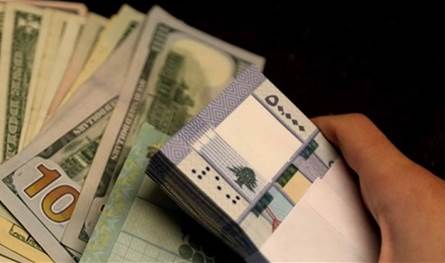
A few days ago, the Financial Attorney General Maher Shaito issued a judicial decision that many described as “bold” to obligate natural and moral persons, including some bankers, to return the sums they transformed abroad during the period of the financial crisis that has been ravaged by Lebanon since 2019, and to deposit them in Lebanese banks in the same currency, during a period of two months and under the direct supervision of the financial public prosecutor and according to the conditions that It puts it, with the aim of re -introducing it into the Lebanese banking system.
The decision did not reveal the true value of the money that turned abroad during the crisis, but many concerned indicate that they are estimated at millions of dollars, so what are the repercussions of this decision? Is when returning these funds to the banking system, the Lebanese will regain their deposits, which have been detained for more than 6 years?
In this context, the banking risk expert and researcher at Suleiman Al -Olayan College for Business Administration at the American University of Beirut, Dr. Muhammad Fahili, indicated in an interview with “Lebanon 24” that “since the beginning of the financial crisis in 2019, the Lebanese have lived on the impact of judicial decisions and bank circulars all of which are rescue steps, the last of which was the decision of Judge Maher Shaito.”
He said: “On the surface of the decision, it seems strong or historical, but when we put it in the balance of reality, we see that it is closer to a political message and moral pressure from it to an actual financial solution.
Fahili considered that “the scene today reminds us of the experience of the basic generalization No. 154 issued by the Bank of Lebanon in 2020, then the banks committed to the urbanization of senior shareholders and managers to return 15% to 30% of the money they have transformed abroad since 2017, and put them in frozen special accounts.”
He added: “Circular No. 154 was promoted to him as if it was the beginning of reform, but it was found after years, that the depositors did not know how much the total money was, and no transparent data was published, nor was this funds used to protect the small depositors or to restore confidence in the banking sector, which means the clearest circulation was a declaration without application.”
Fahili asked, “Why did Judge Shaito not make a decision to compel banks to adopt the exchange rate of the banking dollar, which clearly specified in the basic circular to the Lebanon Bank, which holds the number 167 issued on February 2, 2024?”
Fahili stressed that “the decision of Shaito may face the same fate, which was faced by the basic circular to the Bank of Lebanon No. 154”, noting that “the money transferred abroad is either spent, invested or betrayed, and thus restoring them within two months is almost impossible.”
According to Fahili’s opinion: “Even if some money returns, it will be added to banking budgets that are burdened with losses, and they remain reserved without any impact on people’s daily lives.” He pointed out that “the most dangerous that these decisions, if not designed in a legal and practical way, may push people more towards dealing outside the banking system,“ cache and shadow economy ”, which weakens the remaining financial mediation and increases Lebanon’s isolation from the international financial system.
He considered that “what is required is a law to control a clear painter that gives decisions a legal basis and prevents selectivity, and the formation of an independent committee that monitors the usual funds and ensures its allocation to protect the small depositors, with full transparency by publishing periodic data on the recovered funds and how to use it, in addition to linking any retrieval with a comprehensive restructuring plan for the banking sector, including removing losses, evaluating assets and separating the viable banks About those clear. ”
Fahili said that “Judge Shaito’s decision carries a symbolic dimension that cannot be denied, as he directs a message that the time of absolute immunity has gone, but the symbolism alone is not enough.”
He stressed that “the country needs an explicit road map that restores confidence in the financial sector and guarantees justice for the depositors, and without that the last judicial decision remains as generalization No. 154 is large but with a meager result,” according to his opinion.
So will the decision of the last financial public prosecutor be an entry point to combat corruption and return bank deposits to their owners after years of waiting?
The post After 6 years of the crisis .. Will the depositors ’money be returned soon? appeared first on 961 tobay Lebanon today.