“Lebanon Debate”
Damascus and Ankara stole the spotlight from Lebanon, without missing the repercussions of the process of redrawing regional and international priorities, which comes in circumstances in which Beirut appears more affected by the surrounding transformations than its ability to impose its own rhythm.
As the Italian capital prepares to host a new round of indirect negotiations between Lebanon and Israel on July 14 and 15, with American mediation, a recurring question arises in diplomatic circles: Does Washington still view Lebanon as an independent priority, or has its approach become part of broader arrangements that include Syria and the Eastern Mediterranean?
This question gained momentum after the accelerated European openness to Damascus, which was embodied in the visit of French President Emmanuel Macron to Syria, in parallel with the movement that Turkey witnessed on the sidelines of the NATO summit, where regional security files, the relationship with Syria, and stability in the eastern Mediterranean topped the communications agenda. Has international interest moved from managing the Lebanese crisis itself to a broader regional approach linking Lebanon to the Syrian arena and to the balances being worked on between Ankara, Damascus, and Western capitals?
In this context, the “Rome Table” appears to be an attempt to maintain the momentum of the framework agreement and prevent the southern front from sliding again, rather than an indication of the return of the Lebanese file to the forefront of American attention. The American administration still supports implementing the agreement and establishing the ceasefire, but it seems less involved in the details of the Lebanese political scene, despite the expected visit of President Joseph Aoun to Washington. This is due to its preoccupation with more urgent issues, especially with the return of tension to its relationship with Iran.
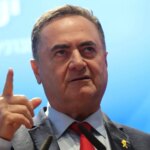
Italy, for its part, seeks to consolidate its role as a platform for dialogue, which was expressed by Foreign Minister Antonio Taiani, considering that Rome’s hosting of the talks reflects his country’s desire to contribute to strengthening regional stability, while Israeli Foreign Minister Gideon Sa’ar described the agreement as “historic,” confirming that the next round will be held in the Italian capital.
Internally, the President of the Republic, Joseph Aoun, stressed that he “will not accept, under any circumstances, that anyone negotiate in the name of Lebanon,” indicating the rejection of any parallel role for official institutions, while condemning the continued Israeli raids, especially those that targeted Nabatieh, calling on the United States and the countries concerned to pressure Israel to respect the ceasefire and begin implementing the terms of the agreement.
In turn, Foreign Minister Youssef Raji considered that the agreement represents only “the beginning of the beginnings,” as it opens the door to negotiation on basic files, from establishing a ceasefire to Israeli withdrawal, liberating prisoners, and demarcating land borders, reiterating the government’s adherence to restricting weapons to the state and rejecting any external guardianship of the Lebanese decision.
This position finds support from the Phalange Party, which called for accelerating the full implementation of the agreement, allowing the completion of the Israeli withdrawal, creating conditions for the return of the displaced, and launching the reconstruction workshop.
On the other hand, Hezbollah continues its approach that rejects the current path. Representative Hussein Jishi considered that the agreement gave Israel “gains without return,” questioning the feasibility of entering into new negotiations as long as the ceasefire agreement essentially stipulated Israel’s complete withdrawal from Lebanese territory, denying at the same time that Iran was negotiating on behalf of Lebanon.
Former Progressive Socialist Party head Walid Jumblatt also attacked the agreement, criticizing its content, which “Israel dictated to a Lebanese team at home and abroad with limited experience in law and diplomacy.”
At the diplomatic level, the acting Special Coordinator of the United Nations in Lebanon, Jean Arnault, began a visit to Israel to hold talks on consolidating the cessation of hostilities and implementing Resolution 1701, at a time when Israeli violations continue in the south, coinciding with the circulation of pictures of raising the Israeli flag on Ali Al-Taher Hill, in a scene that reflects the fragility of the calm on the border, especially since it was accompanied by a field escalation in more than one area.