Saeed Abu Zaki and Merrill Rebies wrote on a site the conversation
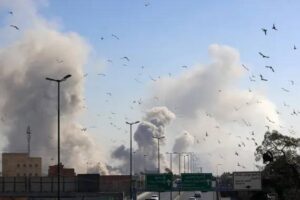
Violence continues several weeks after the outbreak of clashes between the Bedouin tribes, the Sunni jihadist groups and the Druze fighters on July 14, 2025 in As -Suwayda, a city in southern Syria.
Hundreds of Druze were killed in the clashes, and the Syrian Defense Minister deployed forces to contain sectarian fighting.
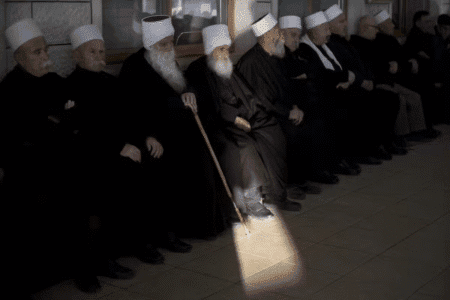
Druze is a religious minority in the Levant, which is the region that covers almost Syria, Lebanon, Jordan, Israel and the Palestinian territories. This religion arose in Egypt as an extension of the Fatimid doctrine, which is a branch of the Shiite sect. The number of Druze today is between one and a million and a half million around the world, more than half of them live in Syria. Most of them live in Lebanon, Israel, Jordan and the occupied Golan Heights.
We are experts in the Druze and Lebanese history, and we know that the conflict in As -Suwayda is considered by the Druze in Lebanon – and the Druze everywhere – a very personal issue.
Moreover, the horrific stories that come out of As -Suwayda have resonance in Lebanon, where many Druze also fear the danger of sectarian violence and lack of confidence in the current leadership.
Links formed over a long history
Many researchers attribute the strong bond between the Druze in Syria and Lebanon to their common belief – which is partially true – but they often ignore a vital element in the same amount: the collective conscience that is formed by a distinctive origin story.
Understanding how artificial intelligence changes society
Get our newsletter
The Druze themselves see an ancient tribal alliance, which has a blood link, which has evolved into an extended family spread in various regions. This self -perception is so deeply rooted, to the point that it led to the emergence of a famous Levantine saying: “Druze is like a copper plate, wherever it struck it, I ran.”
According to the local heritage, several Druze families immigrated from Mount Lebanon to the Houran area, south of Damascus, for more than three centuries, paving the way for thousands of others. As -Suwayda is the capital of the Druze Zone in Houran. The Houran region is the second most recent Druze settlement – after Jordan – dates back to the eighteenth century.
The founding event in the modern history of society was the Druze Intifada in Houran against the Ottoman ruler of Egypt, Muhammad Ali Pasha, in 1837.
The ruler insisted on imposing compulsory recruitment and disarmament on the Druze. The sect rebelled because these two measures would endanger its security and independence, so the ruler sent the army to occupy the Levant.
During the revolution, the Druze revolted from Mount Lebanon and Wadi Al -Tayem – a historical Druze area that includes the Lebanese and Hasbaya region in the southeast, near the Syrian border – to divert the attention of the Egyptian army and sent fighters to support their Syrian relatives.
In 1838, many of these Lebanese fighters were killed, especially in what is known as the Battle of Wadi Bika, near the Lebanese -Syrian border; Where an entire Druze battalion was trapped by the Egyptian forces and almost eliminated it.
In 1860, a third civil war broke out in Mount Lebanon between the Druze and Maronites during the era of the Ottomans. The Maronites are an oriental Catholic Christian community, most of which are in Lebanon. The conflict focuses on controlling the southern regions of the mountain, historically known as the Druze country.
With the escalation of violence between the two societies, Druze Houran rushed to help their Druze colleagues in Mount Lebanon, which led to the weight of the balance of war in their favor.
During the First World War, the famine struck Mount Lebanon, and about 200,000 people died. Druze Houran provided support to the Druze in Lebanon by providing them with basic grains, and many of them settled in Houran to escape starvation.
These are only a few examples of a long history of mutual support that enhances the Druze collective memory that they are not just a society – but a coherent extended family that extends across the national borders.
Changing borders
As a religious minority in the Levant, the Druze has long defended their religious freedom and identity.
The emirates of Mount Lebanon have achieved great success in achieving and preserving their religious independence, at least from the twelfth century to the nineteenth century; The Druze guaranteed a ruling for one of their princes, and the practice of their religious and social rituals freely. The modern state of Lebanon has evolved from this independent Emirates.
However, the Druze did not consider their struggle for social and religious independence as a statement to attack their neighbors – especially Arab Muslims – but rather considered it a guarantee of their faith and security. They do not equate religious freedom, independence and independence. Indeed, many Druze in the region oppose the idea of the Druze state.
Starting in the thirties of the last century, the Zionist leaders, aspiring to establish a Jewish state, sought to exploit the desire of the Druze to self -independence through the proposal to establish a Druze state in Houran. They depicted it as a friendly buffer country on the future of the future of Israel. More importantly, they wanted to expel the Druze from Galilee and Mount Carmel, realizing that they lived there for many centuries.
After the six -day war in 1967 between Israel, Egypt, Jordan and Syria, this idea expanded to turn into a broader Israeli plan for the fragmentation of Syria and Lebanon into five sectarian countries: an Alawite state in the north, a Christian state in the west, a Druze state in the south, a Kurdish state in the east, and a Sunni state in the center.
Since October 7, 2023, some Druze leaders – such as Walid Jumblatt, the former minister and head of the Progressive Socialist Party – have expressed their concerns that Israel may try to revive this plan to reshape the region to a “new Middle East” with possible new borders in Syria, Iraq, Lebanon and the Palestinian territories. Indeed, since the fall of the Assad regime in Syria, Jumblatt expressed expressed concern about the emergence of possible new borders.
Historically, the highest Druze religious authorities rarely interfere in daily political affairs. However, they are expected to provide moral and political guidance in times of crisis, as society considers them a protector of faith, identity and morals.
Recently, the prominent Druze spiritual reference in Lebanon, Sheikh Amin Al -Sayegh, who was at odds with Jumblatt in the internal affairs of the sect, expressed similar concerns in a message of condolences and public support for the Syrian Druze. He emphasized the Arab -Islamic identity of the sect, and warned against giving priority to material security for the historical Druze identity. Al -Sayegh’s position reflects the established Druze political principles, which are rooted in its ancient traditions.
The political message was clearly indicating an increasing direction between some Druze, including the Syrians, to consider establishing stronger relations with Israel for security purposes.
Increasing fears of sectarian violence
Lebanon has a long history of sectarian violence, and recent events in Syria are really concerned about religious minorities in Lebanon, including Druze.
In March 2025, more than 1,400 Alawite civilians, most of them in coastal cities such as Lattakia and Banias, were killed by the newly formed Syrian forces.
In June, 25 Syrian civilians were killed and more than 60 others were wounded when an extremist Sunni group attacked the Church of the Prophet Elias of the Greek Orthodox in Damascus. Since mid -July, Bedouin clans and state security forces of the Sharia regime have been targeting and killing Druze civilians in Sweida.
With the presence of many Bedouin tribes in Lebanon, and the development of tension into an open sectarian confrontation, Druze leaders there feared from the extension of sectarian violence to their local societies, as a result of the call of the Syrian Bedouins to generally mobilize the Arab tribes in the region against the Druze. This call is based on unconfirmed reports that the Druze kill civilians.
Druze leadership in Lebanon
Despite the increasing frustration with the worsening economic crisis in Lebanon – which is partly attributed to the political leadership – most Lebanese Druze remained loyal to traditional figures such as Jumblatt, who was long seen as the most able goalkeeper to protect their security and sectarian interests.
But the shock of the last violence in As -Suwayda, as the militias allied with the Syrian regime targeted the Druze civilians, they destroyed this loyalty. Many Lebanese Druze expected their leaders to use their external influence to protect their relatives across the border. This noticeable failure – along with the continued support of Jumblatt to the regime led by President Ahmed Al -Sharaa in Syria – has sparked widespread criticism within the sect. Jumblatt acknowledged himself with this harsh criticism in an interview with him recently.
For many Druze, the brutal events in the endosperm were very shocking, and forced them to face their established basic political priorities, namely: security and the preservation of religious and social independence. In light of this, some began to re -evaluate the established assumptions that the current leadership is able to maintain their religious independence, and most importantly, to maintain their safety.
The post Druze is an interconnected community – and violence in Syria raises fears in Lebanon appeared first on 961 tobay Lebanon today.