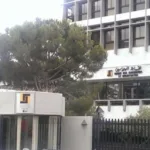
In an article by writer Youssef Diab in Asharq Al-Awsat newspaper, it was revealed that Minister of Justice Adel Nassar referred the file of the “Al-Qard Al-Hassan” institution, known as the financial arm of Hezbollah, to the discriminatory Public Prosecution, requesting that an investigation be opened into its financial activities, in a step that carries judicial, financial, and political dimensions, and brings back to the forefront the file of financial institutions parallel to the Lebanese banking system and the extent of their compliance with the applicable laws and regulations.
Nassar told Asharq Al-Awsat that the procedure “came based on a study conducted by the ministry, and we formed convictions and reasons that led to placing the case in the custody of the Public Prosecution, which will take the necessary procedures,” explaining that “work was done on more than one issue, and we found sufficient reasons for referral.”
The Minister of Justice stressed that the issue of whether or not there is a crime is up to the Cassation Public Prosecution, which will take action and take what it deems appropriate, stressing that the Ministry’s role is limited to referrals when the data that requires investigation is available.
Nassar denied that the move was based on correspondence or an external request, stressing that the matter “is related to a specific role played by the ministry and is not the result of any external review or request.” He pointed out that the procedure is not limited to the “Al-Qard Al-Hassan” institution only, but also includes other institutions, including “Jood” Company.
He explained that the Ministry conducted an internal study of the file, and found that there were points and question marks about the nature of the activity practiced by these parties, and the financial activities that may result from it, stressing that the judicial investigation will determine whether these activities constitute violations or crimes that require prosecution, and that this issue is determined by the judiciary independently, and not by any other authority, including the Ministry of Justice.
According to a judicial source told Asharq Al-Awsat, the Cassation Public Prosecutor, Judge Rami Al-Hajj, received, on Monday, the Minister of Justice’s referral, and is studying it before setting dates for the investigation sessions. The source suggested that the investigation will be complex, as part of it may fall within the jurisdiction of Public Security, and another part may fall within the jurisdiction of the Ministry of Interior, to verify whether the license of the “Al-Qard Al-Hassan” association is still valid or frozen.
The source indicated that if financial violations are proven, part of the investigation will return to the Bank of Lebanon and the Special Investigation Commission, to find out the source of the funds.
This step comes at a time when “Al-Qard Al-Hassan” has been subject to sanctions imposed by the US Treasury for years, while the institution’s work is not recognized or licensed by the Lebanese banking authorities. The Bank of Lebanon has previously issued circulars confirming the prohibition of dealing with banks and licensed financial institutions.
The referral of the file is seen as a test of the Lebanese state’s ability to impose its supervisory authority over the various financial institutions operating on its territory, especially after the financial collapse that struck the traditional banking sector since 2019, and the accompanying expansion of alternative financial networks, including “Al-Qard Al-Hassan,” which turned into a parallel financial system that meets the needs of Hezbollah and its environment, by granting loans in exchange for mortgages of jewelry and real estate.
On the other hand, the file is expected to raise a wide political controversy and call for a counterattack from Hezbollah, which views the increasing pressure on the institution as an extension of the course of sanctions and financial blockade imposed on it and its environment for years, especially during the war phase, and the accompanying provision of aid to a wide segment of displaced people from the south, the suburbs, and the Bekaa.
The judicial source told Asharq Al-Awsat that Hezbollah would cooperate with the judiciary in this file, and present the evidence it has to prove that the institution is not carrying out any illegal act, noting that a delegation of Hezbollah representatives visited the discriminatory public prosecutor two weeks ago, and pledged to stop working on the institution’s ATMs, or making transfers and deposits that conflict with the license granted to it.