The Israeli newspaper “Maariv” revealed a joint Egyptian-French move aimed at putting pressure on the United States to force it to oblige Israel to stop the war in Lebanon, at a time when regional fears are increasing about the expansion of the confrontation and the political pressures that may be imposed on Beirut during the next stage.
According to the newspaper, Cairo is showing increasing dissatisfaction with the course of events in Lebanon, not only because of the ongoing Israeli military operations, but also as a result of the way the Lebanese file is being managed and the ongoing communications surrounding it, whether on the Lebanese side or by the American mediator who is leading the calm efforts.
Maariv indicated that recent days have witnessed intense contacts between Egypt and France within the framework of Arab and international coordination aimed at pushing Washington to exert actual pressure on Israel in order to stop military operations in Lebanon.
This comes in conjunction with an official Egyptian position reaffirming its rejection of any aggression against Lebanese territory, and full support for Lebanon’s unity, institutions, sovereignty, and territorial integrity. Cairo also stressed, according to the newspaper, the necessity of Israel’s withdrawal from Lebanese territory and the full implementation of Resolution 1701, in addition to enabling the Lebanese state and the Lebanese army to extend their authority over the entire Lebanese territory.
The newspaper reported that Egypt views with concern the possibility of continued international pressure on the Lebanese leadership to push it to make additional concessions without obtaining clear guarantees to stop the war or put an end to Israeli military operations.
“Maariv” quoted informed sources that, during the recent period, Cairo held contacts with officials in Washington and several European capitals, as Israel confirmed during these consultations that its goal is to impose a new security reality that guarantees the protection of the northern settlements and prevents any future threat from Lebanese lands.
She added that Egyptian officials came away with the impression that Israel seeks to link any complete withdrawal from Lebanese territory to addressing Hezbollah’s weapons issue and its future, which Cairo considers a complex approach that may hinder reaching a quick settlement.
According to the newspaper, the Egyptian side believes that the pressures exerted by Washington on Lebanon are not accompanied by clear commitments requiring Israel to stop its operations or provide corresponding guarantees, which may lead to increased pressure on Beirut without achieving actual stability on the ground.
It also indicated that Cairo adheres to the principle of priority of complete Israeli withdrawal from Lebanese territory before discussing any other files, including the Hezbollah weapons file, considering that addressing this file must take place through an internal Lebanese dialogue and not through external pressures or conditions that precede withdrawal.
These data come in light of the escalation of regional and international diplomatic activity related to the ongoing war in Lebanon, where American, European and Arab initiatives intersect with complex security and political negotiations dealing with the future of the southern border and mechanisms for establishing a ceasefire and implementing Resolution 1701.
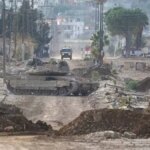
This also coincides with the continuation of Israeli military operations in southern Lebanon, and with the approaching date for discussing the future of UNIFIL forces in the Security Council, a file that has become one of the most prominent elements of tension between Israel and countries supporting the continuation of the international mission in southern Lebanon.
In parallel, diplomatic reports talk about attempts to link the Lebanese arena to any broader understandings that may arise in the future between the United States and Iran, but this path is still shrouded in many ambiguities, in light of the continuing escalation on the ground and the divergence of positions regarding the terms of the truce and the mechanisms for implementing it.