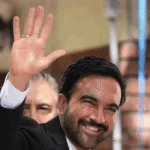
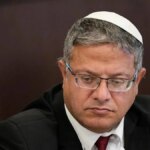
Prime Minister Nawaf Salam confirmed that Lebanon is going through “the most dangerous crisis since the establishment of the Lebanese state,” considering that any actual rescue of the country “is impossible to take place without a clear return to the logic of the state,” in a remarkable political position he launched during the dinner of the Al-Maqasid Islamic Charitable Society in Beirut.
Salam said that the state that the Lebanese want is “a state of citizenship, effective institutions, an independent judiciary, and modern administration,” stressing that “the state can only be established by one national decision, which is the decision of its constitutional institutions, and one weapon, which is the Lebanese army, and one law that no one is above and no one remains outside.”
In a speech characterized by a high tone regarding the past stage, the Prime Minister said: “Enough of the absurd adventures in the service of foreign projects and interests, the latest of which is a war that we did not choose, but rather was imposed on us, and it led to Israel occupying 68 towns, villages, and sites after we were seeking to expel it from five points.”
He added: “After all this, with the killing, destruction, displacement and tragedies it brought, those who try to belittle our minds come out and call these victories,” stressing that “incitement and betrayal will not intimidate us, as we are steadfast in our national choices and strong with the support of the majority of Lebanese for them.”
Salam believed that Lebanon had witnessed, over the past years, a widespread collapse after “the state was treated as a spoil, not as a unifying framework for all the Lebanese,” pointing to the decline in the prestige of institutions, the disintegration of public administration, the erosion of the middle class, and the migration of youth, which led to a deep crisis of confidence between the citizen and the state.
He stressed that getting out of the crisis requires “facing the whole truth, no matter how bitter,” and working to fortify the internal structure, strengthen institutions, and mobilize Arab and international support to strengthen Lebanon’s position in the “difficult negotiations” that began yesterday, in addition to moving within international forums to demand sending a UN mission to collect evidence about the crimes committed by Israel.
In another aspect of his speech, Salam honored the former president of the Maqasid Society, Dr. Faisal Sinu, praising his management of the institution “in a time of collapse, not in a time of plenty,” considering that he proved that management “is not just numbers and decisions, but vision, patience, and courage.”
He also congratulated the new president of the association, engineer Diyara Tabbara, as the first woman to hold this position in the association’s history, considering that her election carries “a profound civilizational and national significance,” and reflects Al-Maqasid’s fulfillment of its historical mission of supporting education and empowering women.
Salam concluded by stressing that Beirut “is not just a city, but a pioneering experience in freedom, enlightenment, and coexistence,” adding that the city that has gone through wars, crises, assassinations, and explosions “every time refused to surrender and rose again.”
Salam’s positions come at a time when the region is witnessing intense diplomatic activity on the lines of Lebanon and Israel, after the US State Department announced the extension of the ceasefire between the two sides for a period of 45 days following a third round of discussions held in Washington on May 14 and 15. Washington also announced the resumption of the political track of the negotiations in early June, in addition to launching a security track inside the Pentagon with the participation of military delegations from Lebanon and Israel, amid continued field escalation and Israeli raids on Lebanese territory.