Hours after the ceasefire with Israel went into effect, and in light of the sensitive political and security circumstances that followed weeks of bloody escalation, the President of the Republic, General Joseph Aoun, addressed this evening the first official speech to the Lebanese people after the agreement, stressing that this achievement was not just a temporary settlement, but rather the result of the sacrifices of the Lebanese and intense political and diplomatic efforts, declaring the country’s entry into a new phase entitled consolidating sovereignty and working on permanent agreements that safeguard national rights.
Aoun began his speech by thanking everyone who contributed to achieving the ceasefire, saying: “I extend my thanks and gratitude to everyone who contributed to achieving the ceasefire, starting with the friendly American President Donald Trump, all the way to all the Arab brothers, first and foremost the Kingdom of Saudi Arabia,” noting the reliance on their friendship to complete what Lebanon began and achieve its aspirations.
He stressed that the ceasefire “was the sum of everyone’s efforts, and the fruit of the sacrifices you made that awakened the conscience of the world.” It was also the result of the steadfastness of the Lebanese in their homes and villages on the lines of fire, and the efforts of those who came together in the ordeal, in addition to “tremendous efforts made by all Lebanese officials with our brothers and friends of Lebanon in the world,” through intense and continuous communications that “turned days into nights.”
Aoun added: “We endured accusations, insults, accusations, and misguidance, and we did not back down until it became clear that we were right, and until it was confirmed to the whole world that what we did was the best and most correct.”
He pointed out that the next stage, which will witness the transition from establishing a ceasefire to working on permanent agreements, may expose Lebanon to political and media attacks, “for the simple reason that we have regained Lebanon and Lebanon’s decision for the first time in nearly half a century.”
He stressed that Lebanon “negotiates on its own behalf and decides on its own,” adding: “We are no longer a card in anyone’s pocket, nor an arena for anyone’s wars, and we will never return. Rather, we are a country that alone has its own decisions.”
Regarding the negotiating track, Aoun stressed that the negotiations “are not weakness, retreat, or concession, but rather a decision that stems from the strength of our belief in our right, our concern for our people, and our responsibility to protect our homeland by all means.”
He stressed that “negotiations do not mean and will never mean giving up any right, giving up any principle, or compromising the sovereignty of this country,” stressing his readiness to bear full responsibility for these choices “and go wherever he may to liberate my land, protect my people, and save my country,” stressing that his mission is clear: “to save the country and its people.”
“Aoun” stressed that “there will not be any agreement that affects national rights, detracts from the dignity of the people, or wastes an inch of the soil of this country,” specifying the national goals by saying: “Stopping the Israeli aggression against our land and our people, Israeli withdrawal, extending the state’s authority over its entire territory exclusively by its own forces, the return of prisoners, and the return of people to their homes and villages afforded security, freedom, and dignity.”
He added: “I will not allow a single Lebanese to die from today, or the continuation of bleeding from my family and people for the sake of the interests of the influence of others or the calculations of the axes of near or distant powers.”
He addressed the Lebanese, calling on them to give priority to reason and not to be led by accusations of treason, stressing that “nations are not built by instinct, but by awareness, unity, and trust.”
He said: “The Lebanese are all in one ship. Either we guide it wisely to safety, or we sink it and all of us sink with it,” stressing that “the state project is the strongest, most durable, and most secure for all.”
He concluded his speech with a message to the displaced, stressing that they will return to their homes and that the state will be by their side. He addressed the world, saying: “Lebanon will not be broken, its people will not die, its right will prevail. Our future will be created by our will and by the will of all the Lebanese,” and he concluded his speech with “Long live my people, long live Lebanon.”
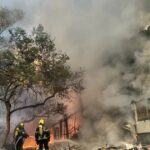
The ceasefire entered into force at midnight Thursday-Friday, after weeks of violent confrontations that left thousands of martyrs and wounded and led to massive waves of displacement in a number of Lebanese regions.
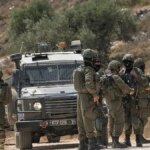
The agreement, according to the wording, stipulates a cessation of hostilities, with Israel retaining the right to “self-defense” in the face of any imminent or existing threat. It also does not include an explicit text for an immediate withdrawal from all areas that Israeli forces entered during the recent operations, which places the next stage before delicate political and security challenges.
The agreement was achieved as a result of extensive communications that included American mediation and Arab and international action, within the framework of an approach that separates the Lebanese track from the rest of the regional files, while keeping the channels of communication open to stabilize the calm and move to broader arrangements.
The President of the Republic’s speech places this agreement in a broader context, as a first step in a negotiating path aimed at consolidating sovereignty and extending state authority over its entire territory, and turning the page on repeated confrontations, in preparation for the stage of reconstruction and political and security stability.