Alan Sarkis – Call of the Nation
Yesterday almost went down in history in terms of the weight of the event. It began with a tweet by US President Donald Trump and continued with news from Tel Aviv about contact that would take place between President Joseph Aoun and Israeli Prime Minister Benjamin Netanyahu. It was followed by a call between US Secretary of State Marco Rubio and Aoun, and its conclusion was captured by the call between US President Donald Trump and Aoun, after which Trump announced that the ceasefire would take effect after midnight, and that he would invite Aoun and Netanyahu to the White House to hold the first important talks since 1983 and peace would be achieved quickly.
“The leaders of Lebanon and Israel will make a call, the first of its kind in decades, in a step that may constitute a significant shift in the course of relations between the two countries. I am seeking to find a temporary outlet between Lebanon and Israel, and a long time has passed since the leaders of the two countries spoke, about 34 years. And that will happen tomorrow.” This tweet by Trump was enough to ignite the fragile Lebanese reality. Analysis and speculation abounded about what would happen, and the ambiguity increased after the Israeli media and even Israeli officials announced that a call would take place between the president. The Lebanese and the Israeli Prime Minister, under American sponsorship.
Amid caution, close to fear, on the Lebanese scene, the Iranian stance came as a warning to Lebanon, followed by a call received by Speaker of the House of Representatives, Nabih Berri, from the Speaker of the Iranian Shura Council, Muhammad Baqir Qalibaf, where they discussed the latest developments in the situation in the region and Lebanon, especially in the south, and the issue of a ceasefire.
Although what was announced was a discussion of the security situation, the basis remains Iran’s attempt to preserve the Lebanese card, and no one knows whether the Iranian call was a warning of the consequences of Aoun’s communication with Netanyahu or a threat. Soon, a call took place between Berri and Aoun, where the Speaker of the Council informed him of the rejection of any communication between the Lebanese presidency and Netanyahu.
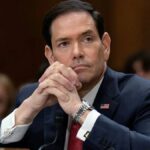
In the afternoon, the call took place between Rubio and Aoun, and Rubio tried to present a set of ideas for a solution to move toward a ceasefire and then negotiations. When the American minister proposed holding a tripartite call that would include him, in addition to Aoun and Netanyahu, Aoun’s position came to reject this formula, and after this rejection, the conversation was limited to following up on matters. The Lebanese-American contact ended as the American ships did not wish. The American President was eager to end the Lebanese-Israeli war and go to permanent peace that would end the problems between the two countries and establish relations far from wars. But the amount of pressure that Baabda was subjected to from the “Shiite duo” and its successor, Iran, may have affected the issue, while the atmosphere had not previously been prepared for such a contact, even though it would have put Lebanon in the spotlight, and would have prepared for a stage of dialogue and peace that Lebanon had been waiting for since 1948.
Aoun’s call with Rubio ended and analyzes abounded about the Lebanese, American and Israeli position, until the most important news came, a call between Trump and Aoun, where the Lebanese President thanked the efforts made by Trump to reach a ceasefire in Lebanon and secure permanent peace and stability, in preparation for achieving the peace process in the region. He hoped that these efforts to stop the fire would continue as soon as possible. Trump responded by supporting President Aoun and Lebanon and stressing his commitment to meeting the Lebanese request for a ceasefire as soon as possible.
It was only a short time before Trump announced that he had “two wonderful calls with the Lebanese President and the Israeli Prime Minister, pointing out that they agreed to a 10-day ceasefire, starting at midnight tonight. I directed my deputy, J.D. Vance, and the US Secretary of State to work with Israel and Lebanon to achieve lasting peace, and I will invite Aoun and Netanyahu to the White House to hold talks.”
In this context, a source familiar with the communications reveals to “Call of the Nation” that Trump did not propose to Aoun a three-way call with Netanyahu, as neither Trump tried nor did Aoun refuse. The source indicates that the response to Aoun’s invitation to the White House to meet with Netanyahu will be discussed at the appropriate time and there is no prior answer, and the current focus is on intensifying negotiations with Israel to reach a final solution, end all outstanding problems, and liberate the land, which is an essential gateway to peace. The source explains that all officials, including President Nabih Berri, are aware of the atmosphere of communications and negotiations, and President Aoun’s concern is to save the country and there is no going back from the monopoly of negotiations and weapons.
Baabda dealt positively with the long American day, as it, in addition to Berri, informed Prime Minister Nawaf Salam and other parties about what was happening. Trump appeared as if he was saving Lebanon from the mouth of the Iranian ogre. He wanted to give a dose of support to the Lebanese state to stand on its feet, and to say to Iran that you have lost the Lebanese card irrevocably.
The region is heading towards a new path that may build peace. Iran, which is negotiating with America, which it describes as the Great Satan, shames Lebanon for its right to such a matter and uses its tools at home to put pressure on the Lebanese state and threaten a coup.
The most important thing remains to preserve the state that is working to separate itself from the “statelet,” and it is required to take bold and decisive steps in the issue of disarming “Hezbollah” after the government considered it an outlaw organization. Therefore, Lebanon can only continue to negotiate to reach peace.