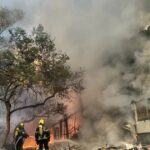
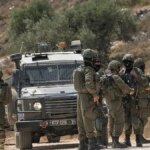
In light of the continuing military escalation in southern Lebanon, Israeli reports revealed the scope of ground operations carried out by the Israeli army inside the border villages. These operations include destroying hundreds of buildings and targeting what the Israeli army considers Hezbollah infrastructure, as part of a battle characterized by an attritional nature and complex field tactics.
According to a report by journalist Amir Bouhbut in the Israeli media, forces from the 603rd Engineering Battalion of the Israeli army participated in large-scale operations inside the southern villages, after moving from fighting in the Gaza Strip to the Lebanese front at the beginning of the month of 3, within the framework of operations led by the 98th Division.
The report indicates that since the beginning of their deployment, these forces have faced field challenges different from those they faced in Gaza, the most important of which is the nature of the Lebanese land, which is characterized by rain, mud, and the lack of axes, in addition to the presence of underground infrastructure and a large amount of weapons, including explosive devices, rockets, and Kalashnikov rifles.
The battalion commander explained, according to the report, that destroying these structures requires greater resources and time, due to the nature of the ground, as “blowing up a building takes a longer time and requires a larger quantity of explosives,” which reflects the complexity of engineering operations within Lebanese villages.
Regarding the nature of the threats, the report indicated that the Israeli forces were exposed to the firing of more than 200 missiles, drones, and drones, in addition to 45 anti-armor missiles since the start of operations, which necessitated a change in fighting methods, especially in light of Hezbollah’s reliance on targeting forces from distances of up to 5 and 6 kilometers.
The battalion commander also acknowledged that there were deaths among the Israeli forces during these operations, noting that an official and an equipment operator from the 601st Battalion were killed at the beginning of the fighting, in an incident he described as “painful,” which reflects the cost of the field confrontation.
The report also reveals that Hezbollah members are adopting tactics based on camouflage, as some of them appear in civilian clothes and attempt to blend in between buildings or operate from within underground infrastructure, while avoiding direct confrontations and relying on firing from long distances.
In one of the most prominent operations, the report indicated the destruction of more than 420 buildings in the town of Al-Adisa in the Marjayoun district, after monitoring what it described as military infrastructure inside it, in addition to the destruction of tunnels and missile launch sites, in an area that previously witnessed clashes in which 5 members of the Israeli commando unit were killed.
The battalion commander concluded by saying that operations will continue “systematically from one village to another,” with the aim of “dismantling structures that took 20 years to build,” considering that this will lead to “removing the operational capacity” of Hezbollah in the south.