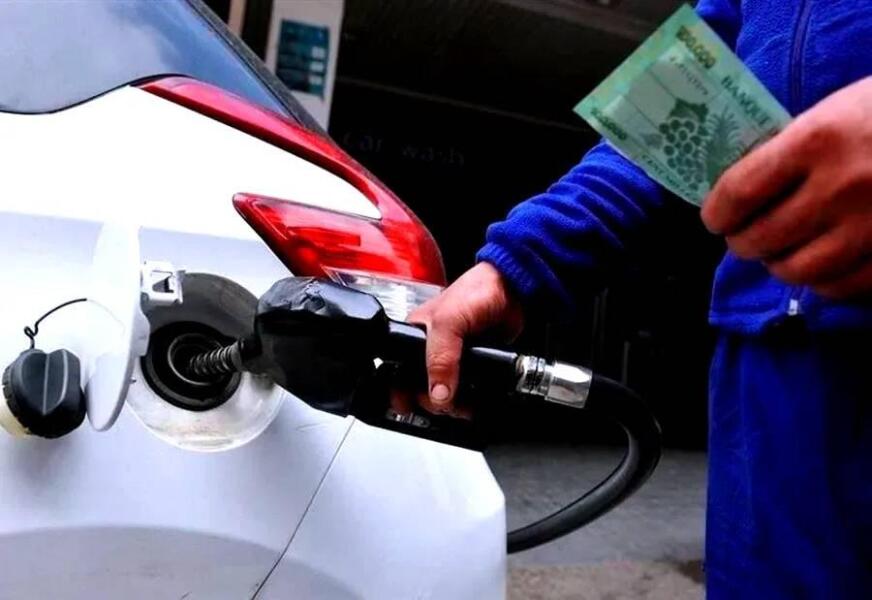
Large increases in energy prices as a result of the war in Iran have sent inflation rates in the United States soaring, hitting their highest level in four years.
The US Department of Labor announced that consumer prices rose in March by an annual rate of 3.3%, the highest rate since 2024, compared to 2.4% in February. This rise is largely due to a 10.9% increase in energy costs, the largest increase since 2005.
According to the Associated Press (AP), prices in March rose by 0.9% on a monthly basis, the largest monthly increase in nearly four years.
Core prices, which exclude volatile commodities such as food and energy, posted an annual rise of 2.6% in March, compared to 2.5% in February.
The war with Iran was the most important factor in reading the monthly inflation index in the United States, as gasoline prices rose by 21.2%, as stated by the US Bureau of Labor Statistics.
The BLS explained that record high gasoline prices were responsible for about three-quarters of the monthly increase. In contrast, another index that excludes food and energy costs recorded a smaller increase of 0.2%.
However, headline prices rose slightly by 0.2% last month, indicating that the gas price shock has not yet affected many other categories.
It is worth noting that the gas price shock resulting from the Iranian war changed the course of inflation from a slow and gradual decline to a sharp increase, exceeding the US Federal Reserve’s target of 2%.
As a result, the US central bank is likely to postpone any interest rate cuts for several months. Gas prices also represent a very tangible cost and have a significant impact on consumer confidence and political sentiment.
Expectations of interest rate cuts following a decline in energy prices
In a related context, Kevin Hassett, the White House economic advisor, said on Friday that the Federal Reserve (the US central bank) will be able to lower interest rates as soon as the reopening of the Strait of Hormuz leads to a rapid decline in energy prices, according to Reuters.
“There will be a rapid decline in energy prices once the strait opens. Once energy prices start to fall, don’t forget that that will put pressure on inflation to come down… I think the outlook for the Fed’s ability to lower interest rates will be very strong,” Hassett told Fox Business.