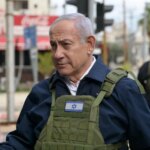
CBS News reported that US President Donald Trump changed his position on including Lebanon in the ceasefire plan, after a phone conversation with Israeli Prime Minister Benjamin Netanyahu.
The network reported that Trump knew that the announced ceasefire included the entire Middle East, and initially agreed to include Lebanon, but the American position changed after Netanyahu called Trump.
The report indicated that the mediators in the US-Iranian negotiations believed that the truce included Lebanon, which was publicly announced by both Pakistani Prime Minister Shahbaz Sharif and Iranian Foreign Minister Abbas Araqchi, which sparked controversy about the scope of the agreement.
This comes as Israel intensified its raids on Wednesday, targeting about 100 sites within just ten minutes, resulting in hundreds of martyrs and wounded, according to the Lebanese Civil Defense, which announced that the number of victims of attacks from March 2 to April 8 reached 1,739 martyrs and 5,873 wounded.
In the same context, Lebanese Prime Minister Nawaf Salam declared a national day of mourning for the victims of the attacks, while the debate continues over whether Lebanon is included in the truce, between Iranian-Lebanese confirmation of this, Israeli denial, and the continuation of military operations.
On the night of April 8, Trump announced that he had reached an agreement with Iran for a two-week ceasefire, after threatening broad military options if Tehran did not open the Strait of Hormuz. Later, the Iranian Supreme National Security Council announced that Washington had agreed to a ten-point Iranian proposal, with direct negotiations to begin between the two sides in the Pakistani capital, Islamabad.
These developments come in light of a very sensitive regional situation, where military and diplomatic paths overlap in multiple regions. The scope of the truce between Washington and Tehran is a crucial factor in efforts to contain the escalation, especially with the continuing confrontations on the Lebanese front.
The discrepancy in statements about including Lebanon in the agreement shows the extent of the political complexities surrounding the negotiations, amid mutual pressures and fears of the failure of the fragile understandings. With the continuation of military operations and conflicting narratives about the content of the agreement, the fate of the Lebanese arena remains a major test of the declared truce.