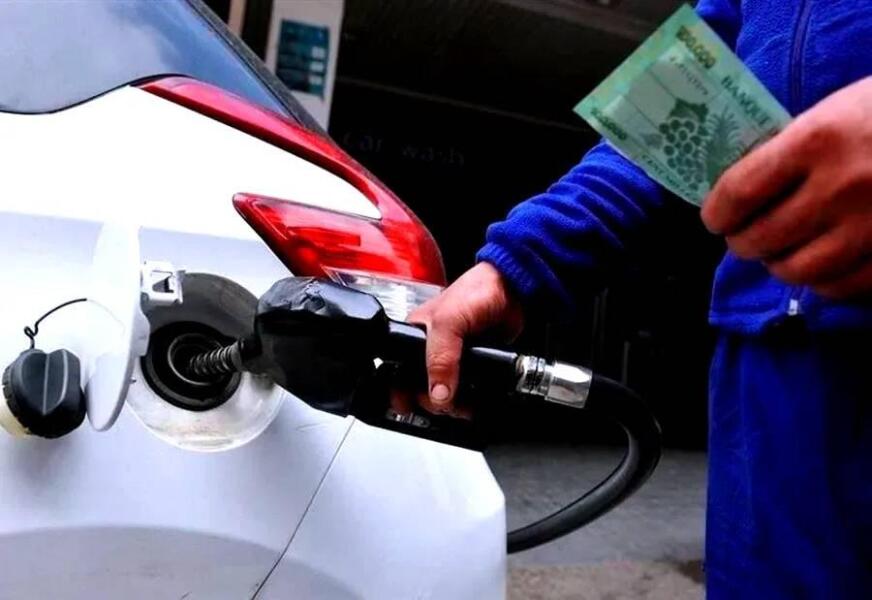
The repercussions of the Israeli war continue to affect the Lebanese economy in all sectors and the public treasury, as expenditures have increased significantly in light of the deterioration and decline of revenues.
Al-Sharq Al-Awsat reported that since the first week of the war, many commercial establishments have resorted to reducing their employees’ working hours by half in an attempt to reduce salaries, while other establishments have completely closed their doors, in addition to those that were destroyed in the southern suburbs of Beirut and the south. This has been directly reflected in the conditions of employees, a large portion of whom still receive less than half the salaries they received before 2019.
The Secretary-General of the Economic Bodies and President of the Beirut Merchants Association, Nicolas Chammas, describes the impact of the current war on the local economy as “enormous,” especially due to the challenges accumulated since 2019, noting that “in 2025, economic growth reached 5 percent, but it came after a decline of 7 percent in 2024, meaning that we had started this year negatively, so the current war would come to worsen conditions.”
Shammas explained in a statement to Asharq Al-Awsat, “According to the World Bank, the economic cost of the last war in 2024 was 14 billion dollars, or about 225 million dollars per day. Therefore, if today we want to rely on this bill, it can be said that the approximate cost of the current war amounts to about 100 million dollars per day, and it is a bill that notes the direct damage to public and private infrastructure, the decline in economic activity, and the direct cost of shelter and assistance to the displaced.”
Shammas points out that “the sectors most affected by the war are the tourism sector, as well as the travel sector, which has declined by more than 80 percent,” pointing out that “the hotel occupancy rate is currently below 10 percent, and the decline is very large in the car rental, furnished apartments, and tourist resorts sectors,” adding: “The negative effects also affect the industrial sector as well as the commercial sector, which has declined by about 50 percent.”
Shammas warned, “If the war lasts, economic growth will turn into a contraction of up to 10 percent.”
Joseph Farah wrote in “Al Diyar”: As the war continues in the region and Lebanon, Lebanon faces a direct threat to its public revenues, and to the financial surplus achieved in recent years, as the state may be forced to face additional burdens, especially those related to relief for the displaced, which puts the financial sustainability that was carefully built during recent years facing a difficult test.
Official figures indicate that the total revenues expected in the 2026 budget amount to about 505.72 trillion Lebanese pounds, equivalent to about 5.65 billion US dollars, an increase of approximately 13.6% over the revenues of the 2025 budget. Tax revenues constitute the largest percentage of this budget (about 82.3%), while non-tax revenues represent about 17.7% of the total.
The head of the Industrialists Association, Salim Al-Zaani, said in an interview with Al-Anbaa Al-Kuwaitia: “Since 2020, Lebanon has been facing a series of severe, if not fateful, crises, and despite the great challenges starting from the Corona pandemic, through the Beirut port explosion, and up to the 2023 war, which continues to date, the sails of the industrial sector have remained steadfast in the face of storms, and today we will continue production despite the horror of the public scene and the fear of its repercussions, because the industrial sector’s steadfastness in the face of crises and wars is a must.” We have to do this, and it is not an option, especially since he is responsible not only for supporting the economy, but also for the livelihood of thousands of workers and employees.”
In response to a question, Al-Zaani said: “The stock of raw materials, especially those designated for the production of medicines and food, is sufficient for more than 8 months, and as long as sea, land and air lines remain open for import, there is no fear of any decline, whether in the size of the stock or in the ability to manufacture production. It must be noted here that the industrial sector is capable and ready to provide an alternative to any imported consumer good that may be subject to interruption due to the difficult conditions in the region, and the evidence is that national industrial products have increased from between 10 And 15% to between 45 and 50% as a result of the dynamism enjoyed by the industrial sector in Lebanon.”
Regarding export, Al-Zaani said: “Export constitutes the main outlet for the Lebanese industry, especially towards the Arab countries. However, today these countries face challenges similar to the Lebanese challenges, which makes commercial communication with them more delicate and difficult. Not to mention that sea export in turn faces great difficulties as a result of the disturbances in the Red Sea, which led sea shipping companies, under the heading of war risks, to raise the cost of insurance for a small container of 20 feet in size by $2,000, and for a large container of 40 feet in size.” 3000 dollars. Therefore, it is natural that these increases will affect the general cost of Lebanese exports, while also noting that industrialists in Lebanon are studying alternative options to reach Gulf markets, including shipping products to safe ports and then transporting them overland to the required markets.”
Al-Zaani concluded by saying: “What is important is that the port of Beirut remains neutral from the circle of conflicts, and this is a basic requirement that we hope will be addressed carefully and precisely, because neutralizing the port is a guarantee for the continued steadfastness of the Lebanese industry.”