In recent days, global oil prices have witnessed remarkable jumps as a result of the escalating security tensions in the Arabian Gulf region and the accompanying incidents targeting oil tankers and facilities, which has directly affected the movement of international markets and raised fears of supply disruption and an additional rise in prices. The price of a barrel of oil has touched the limits of $100, after it had in previous periods recorded higher levels approaching $118, amid international attempts to contain the rise by pumping quantities of strategic reserves into the markets.
In this context, the head of the Syndicate of Station Owners in Lebanon, Georges Al-Barakas, explained in an interview with “Lebanon Debate” that regional developments directly affect fuel prices in Lebanon, indicating that any tension in the Arabian Gulf is immediately reflected in global markets given the major role that the region plays in securing an important part of global energy supplies.
Al-Barakas pointed out that the Arab Gulf countries provide about 20 percent of the international markets’ oil needs, which makes any disruption in maritime transport or supply routes a factor putting pressure on prices. However, he stressed that the movement of supplies to Lebanon has not stopped yet, pointing out that importing companies are making great efforts to maintain the stability of the local market and secure the required quantities.
He explained that Lebanon imports fuel mainly from the Mediterranean basin, especially from Italy, Greece and Turkey, but these countries in turn depend for part of their oil imports on the Arabian Gulf, which makes the Lebanese market indirectly affected by any developments in that region.
Regarding the local stock, Al-Barakas reassured that Lebanon currently possesses a sufficient stock of fuel, which is replenished via ships that arrive successively at Lebanese ports. He also pointed out the presence of additional indirect stock in the tanks of citizens’ cars, noting that the number of cars in Lebanon is approximately one million and eight hundred thousand cars, and if the average content of their tanks is about 25 liters, this means the presence of approximately 45 million liters of gasoline, which is approximately equivalent to the load of a steamship and a half.
He stated that the daily consumption of gasoline in normal circumstances is estimated at about eight million liters per day, which means that the quantities available in the market, in addition to the “hidden” stock in the tanks of cars, stations, and company warehouses, provide a margin of safety for a week in the event of any emergency.
Despite this, Al-Barracks warned that the main factor that will be affected in the next stage is the price, indicating that the continuation of security tensions may push prices to rise further. In this context, he pointed out that despite the announcement by the International Energy Agency and the G7 countries of their intention to pump about 400 million barrels of strategic reserves into the markets, in addition to OPEC’s intention to increase production, the price of a barrel is still moving upward.
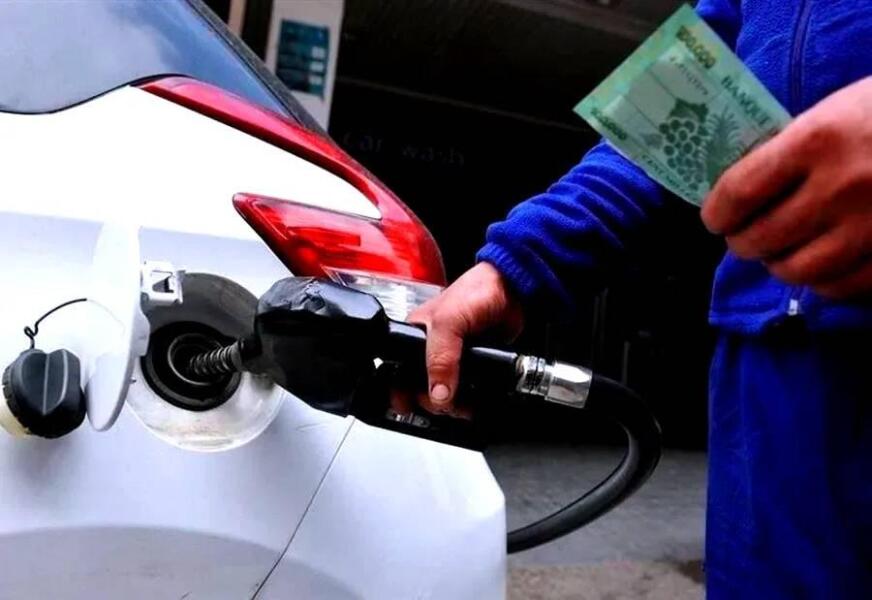
Brax concluded by pointing out that any additional rise in global oil prices will be reflected in the fuel price schedule in Lebanon, expecting that gasoline prices will record a new increase in the next schedule, which may be in the range of one hundred and thirty thousand liras or more depending on the path of global prices, while it is expected that diesel fuel will witness a smaller rise.
The post A significant increase in fuel prices tomorrow… and a can of gasoline will reach a record high! appeared first on 961today Lebanon Today.