An analytical report published by journalist Avi Ashkenazi in the Israeli newspaper “Maariv” revealed mounting fears in Israeli military circles about Hezbollah gradually regaining the initiative on the battlefield, after a period in which Tel Aviv saw that the party retreated under the weight of Israeli attacks.
The report explains that Hezbollah began the current round of confrontation by launching missiles and drones towards Haifa Bay and the Krayot area, a move that Israel considered an official announcement of the start of a new round of fighting.
According to the author, the initial Israeli response was strong and caused chaos within the party’s ranks, leading to a temporary decrease in the number of rockets fired. In addition, the deployment of Israeli forces in advanced locations north of the Blue Line, coupled with the displacement of hundreds of thousands of civilians from southern Lebanon to Beirut, prompted Hezbollah at the time to reevaluate its field calculations.
But the report indicates that this effect did not last long. Since Thursday evening, there have been clear signs that the party has begun to regain control in the field, focusing its operations in two main directions.
The first path is to target Israeli forces inside southern Lebanon with anti-armor missiles and mortar shells, especially in the front defensive line that the Israeli army is trying to consolidate inside Lebanese territory.
The report states that these attacks resulted, according to Israeli sources, in the killing of two soldiers from the Combat Engineer Corps and the wounding of ten other soldiers, five of whom were in serious condition, during clashes that took place in the western sector of southern Lebanon near the Zarit settlement.
The second path is to escalate the launching of rockets towards northern Israel, not only towards military sites or border towns, but also towards larger cities and population centers such as Haifa, Al-Karyut, Tiberias, Karmiel, Nahariya, and Acre, in addition to Kiryat Shmona and the rest of the towns of the Galilee.
The article indicates that dozens of rockets and missiles have been launched towards Israel since the weekend, while about two million Israelis have been living for days under the threat of attacks coming from both Lebanon and Iran, according to the Israeli account, while air defense systems intercept most of these missiles.
The writer believes that the Lebanese arena is currently being treated in Israel as a “secondary front” compared to the war with Iran, as the leadership of the northern region has received instructions not to expand the confrontation at this stage, focusing on preventing the targeting of homes in the border towns and trying to weaken Hezbollah in preparation for any possible developments in Iran.
The report quotes a military source as saying that “the fall of the regime in Iran will also lead to the fall of Hezbollah,” considering that the main battle is currently taking place in the Iranian arena.
Ashkenazi adds that the Israeli army, despite its capabilities, is not a military force the size of the United States, but rather a relatively small army that possesses great capabilities but faces resource constraints, which makes it unable to fight a large-scale war on two fronts with a huge daily fire intensity.
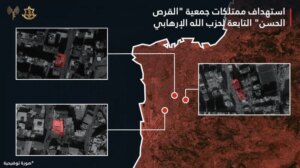
According to the report, the Israeli Air Force is currently focusing most of its efforts on strikes inside Iran, while operations in Lebanon are limited to targeting party leaders and limited strikes in the southern suburbs of Beirut with the aim of putting pressure on the Lebanese government.
The writer points out that about 50 buildings have been destroyed so far in the suburb, while about 200 Hezbollah fighters have been killed since the beginning of the war, according to Israeli estimates.
Ashkenazi believes that the current Israeli operations in Lebanon resemble what he calls “boutique attacks,” that is, limited and focused strikes, as only a small portion of the remaining air force is allocated to supporting ground forces in the new defensive line inside southern Lebanon, without sufficient force to completely paralyze Hezbollah’s capabilities.
The report warns that one of the weaknesses in the Israeli strategy is based on the bet that change in Iran will automatically lead to change in Lebanon.
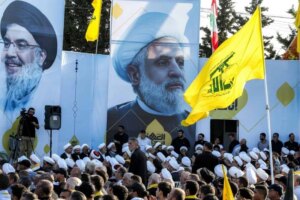
The writer concludes that if the Israeli army wants to return Hezbollah to the state of confusion it experienced at the beginning of the confrontation, it will need a significant escalation in the level of strikes inside Lebanon, noting that one of the options proposed inside Israel is to target the party’s current leadership, headed by Naim Qassem.