The Ministry of Economy and Trade announced the launch of a preventive initiative aimed at ensuring food security and ensuring the availability of necessary goods throughout Lebanon, in light of recent events and current economic challenges. The Ministry confirmed that the current stock is sufficient to meet local consumption needs for several months to come.
The Ministry explained in an official statement issued in Beirut on March 8, 2026, that the goal of this plan is to maintain the smooth flow of supplies and prevent any disruption in the markets, monopolistic practices, price manipulation, or exploitation of the current situation.
The Ministry added that the data available to it indicates that the current stock of basic materials, including food, wheat, and fuel, is sufficient to cover consumption for several months.
It indicated that it monitors stock levels on a daily basis in coordination with importers and suppliers, to ensure the continued distribution of goods and their arrival to all regions and points of sale without interruption.
In parallel, the Ministry is working to proactively secure additional shipments of basic commodities, by identifying national needs for the coming months, and encouraging importers to import additional quantities early to avoid global price fluctuations.
Cooperation is also underway with shipping companies and international suppliers to accelerate the arrival of new shipments to the Port of Beirut and other ports and land crossings.
The Ministry confirmed that it is cooperating with the competent government agencies to ensure the continuity of the supply chain of basic goods, starting from their arrival in Lebanon until they reach the consumer.
This includes giving priority at the ports to unload ships loaded with foodstuffs, and coordinating with the “Beirut Port Administration” and “Customs” to facilitate logistical and administrative procedures, allowing the goods to be cleared and removed from the ports quickly.
It also facilitates the transportation of goods from storage centers to markets, in addition to daily monitoring of the wheat file to ensure its delivery to mills and the provision of flour to bakeries in a timely manner.
The Ministry also indicated that priority was given in distributing diesel to vital institutions, especially hospitals, bakeries, and production centers, according to specific lists of their monthly needs.
Regarding prices, the Ministry confirmed that it has developed a dynamic database to monitor the prices of fuel and basic commodities in the Lebanese markets almost instantly, with the aim of monitoring any unjustified increases and intervening to address them.
It also announced work to activate the “National Council for Price Policy,” which would allow for market control and prevent any exploitation of the current conditions to achieve illegal profits.
In the field of oversight, the Ministry confirmed that the Consumer Protection Directorate intensified its field visits to markets, warehouses and points of sale in various regions.
It confirmed that it will issue arrest reports against violators and refer them to the competent judiciary, indicating that it will not hesitate to close the violating establishments with red wax in cases of monopoly, price manipulation, or abstention from selling.
The Ministry called on citizens to contribute to protecting markets by reporting any violations through its electronic application “MoET Digital Services.” It also urged importers and traders to submit their transactions through approved electronic platforms to speed up their completion and enhance transparency.
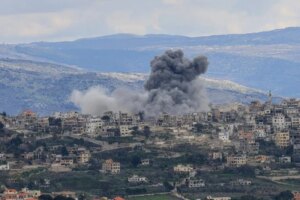
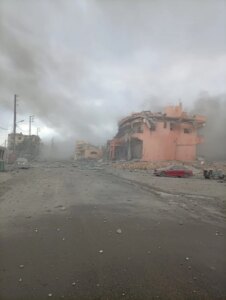
These measures come in light of the difficult economic conditions and regional tensions that may affect trade and supply chains in the region. These developments have prompted the Lebanese authorities to take precautionary steps to ensure the availability of basic goods and prevent any market disturbances or unjustified price increases.