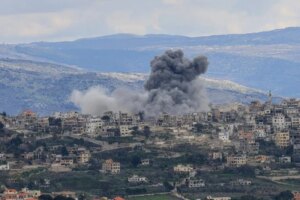
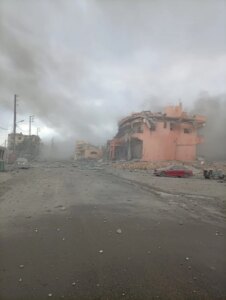
Prime Minister Judge Nawaf Salam affirmed that the Lebanese state is making every effort at the political and diplomatic levels to stop the Israeli aggression against Lebanon and reduce its devastating effects on the Lebanese people, especially on the displaced people who were forced to leave their homes as a result of the military escalation.
In an interview with Asharq Al-Awsat, Salam explained that diplomatic efforts have not yet achieved the desired results, due to the Lebanese situation being linked to regional unrest and the ongoing war in the region. He considered that Lebanon could have avoided a lot of damage “had it not been for the strategic mistake made by Hezbollah by slipping into this war,” which led to dire consequences for Lebanon and for the environment that the party claims it seeks to protect.
The Prime Minister stressed that this war was “imposed on the Lebanese,” and that it is not in their interest, stressing that ending it as soon as possible represents an urgent national necessity.
Salam pointed out that international efforts face great Israeli intransigence, in addition to the United States’ preoccupation with the ongoing war and its effects on the security of the Arabian Gulf region. At the same time, he expressed his astonishment at the targeting of this region by Iran, even though it had previously extended a hand of friendship to it and declared its rejection of the war before it occurred.
Salam stressed that the government is determined to implement its recent decisions that prevented Hezbollah’s security and military activities, noting that the state, with its military and judicial institutions, is doing its duty in this regard, but the conditions of war make implementing these measures more difficult.
In the same context, he explained that the Lebanese authorities’ strictness in granting visas to Iranians is due to information obtained by the relevant agencies about activities potentially carried out by individuals linked to the Iranian Revolutionary Guard, which may endanger Lebanese national security.
He pointed out that Lebanon monitored the departure of a number of these people after the decision was taken, stressing that Beirut desires to establish the best relations with Iran, but within the framework of normal relations between countries, refusing to link the fate of the Lebanese to the interests of any other country.
The Prime Minister touched on the humanitarian effects of the war, noting the extent of the suffering resulting from the large displacement from the south and the southern suburbs of Beirut.
He said that the government is working with all its might to meet the basic needs of the displaced, including shelter, food, and medicine, despite the limited resources available to the state, pointing out his personal follow-up of this file through the operations room of the Disaster Management Unit in the government palace.