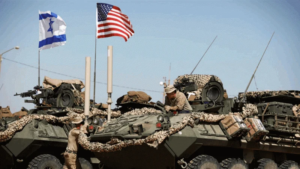
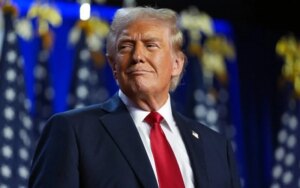
Israeli media assessments revealed the broad outlines of the strategy followed by US President Donald Trump in the ongoing conflict with Iran, in light of the escalating military confrontation between the United States and Israel on the one hand, and Iran on the other.
According to what was reported by Israeli Channel 12, Trump is adopting a unilateral withdrawal approach, which may allow him to declare victory even if the Iranian regime does not fall, while not officially adopting the goal of overthrowing the regime, which reflects an almost certain recognition of the impossibility of overthrowing it completely at the present time.
The channel pointed to three main factors that could determine the duration of the conflict, which are oil prices, losses among the ranks of the American army, and changing public opinion within the United States.
She explained that Washington and Tel Aviv have observed increasing disagreements within the Iranian regime, as it appears that officials are not coordinating their movements effectively.
She added that the current American goal focuses on reducing the military capabilities and authoritarian structure of the Iranian regime, while the next stage may include encouraging the Iranian people to demonstrate in the streets with the support of the US Central Intelligence Agency (CIA), with the expectation that splits will occur within the regime.
At the same time, the channel reported that oil prices witnessed a significant rise as a result of the war, with the price of a barrel exceeding $94 on Friday, and it quoted Bloomberg Network estimates that the continued closure of the Strait of Hormuz may push prices to $108 per barrel.
This comes as about 20% of global oil and gas trade passes through the Strait, including liquefied natural gas shipments heading to Asia and Europe.
On the military level, data indicate that the American army has so far suffered six deaths and 18 wounded, while the Iranian Revolutionary Guard announced that the losses of the American forces exceeded 680 dead and wounded.
Data published by Axios also showed that six out of ten Americans oppose the continuation of the war on Iran, which may affect the Trump administration’s decisions regarding continuing military operations.
Since last February 28, the United States and Israel have carried out strikes on Iran, resulting in the deaths of hundreds of Iranians, including Iranian leader Ali Khamenei and senior security officials.
Iran responded by launching missile and drone attacks on Israel, and also targeted what it describes as “American interests” in the Gulf states, Iraq and Jordan, which the targeted Arab countries condemned and demanded an end to the attacks.
In the political context within the United States, the US Senate a few days ago rejected a draft resolution that aimed to limit President Trump’s powers to continue military operations against Iran.
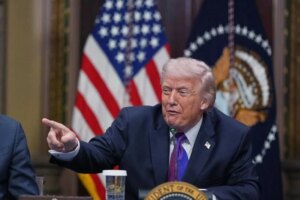
Trump confirmed, in a telephone interview with NBC News, that he seeks to completely remove the leadership structure in Iran, considering that his country desires to have a “good leader” at the head of the country after the current stage, without revealing specific names.
The US President also called on the Iranian Revolutionary Guard, army and police to lay down their weapons, warning that they “will face nothing but death,” and urged them to stand by the people and contribute to “restoring the country.”
On the other hand, Senate Democratic Minority Leader Chuck Schumer described the conflict as “Trump’s war,” considering it a war of choice without a clear strategy or ultimate goal.
Democratic Senator Mark Warner also expressed his concern that allowing Israel to force the United States into a new conflict may pose a threat to American interests, noting that threatening Israel does not necessarily mean there is an imminent threat to the United States itself.