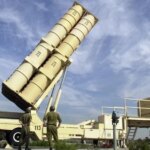
The American Wall Street Journal reported that Russia is considered one of the most prominent winners at the beginning of the American-Israeli war against Iran, due to Iranian missiles and drones consuming the stock of interceptor missiles from the Patriot system, which Ukraine desperately needs to defend its territory.
During the early days of the conflict, the United States and its allies launched hundreds of interceptor missiles to counter the barrage of Iranian ballistic missiles and drones.
Chairman of the US Joint Chiefs of Staff General Dan Kaine explained that Iran has launched more than 500 ballistic missiles and 2,000 drones since the beginning of the confrontation, stressing at the same time that the United States has enough ammunition to continue its operations against Iran.
Before the outbreak of the US-Israeli war on Iran, Patriot production problems had already affected Ukraine’s stockpiles and put European allies on long waiting lists extending for years, allowing Russia to exploit weaknesses in Ukrainian air defenses.
Lockheed Martin currently produces about 600 PAC-3 missiles per year used in the Patriot system, while intercepting one ballistic missile requires launching at least two interceptor missiles, and often launching a third missile if the first two attempts fail.
Data show that production of interceptor missiles takes several months and costs millions of dollars, as their components are imported from the United States and other countries.
Deputy Chief of the Ukrainian Air Force, Colonel Pavlo Yelizarov, stated that Russian ballistic missiles pose the greatest threat to Ukraine, and that the “Patriot” system is considered the primary means of confronting them.
Ukrainian and Western intelligence estimate that Russia is now capable of producing about 80 ballistic missiles per month, while the Ukrainian Air Force needs at least 60 PAC-3 missiles per month to keep up with Russian attacks.
Last February, German Defense Minister Boris Pistorius called on European NATO member states to donate interceptor missiles to meet this need, following a similar appeal from his Ukrainian counterpart, Mykhailo Fedorov.
However, Germany was the only country that pledged to provide only five missiles, which reflects the extent of the shortage in NATO stocks, according to the newspaper.
European and Ukrainian officials have indicated that a shortage of interceptor missiles could complicate peace talks, especially since Western security guarantees for Ukraine include strengthening its air defenses.
The Patriot system remained the main pillar of the Western air defense system during the four years of war in Ukraine, due to the difficulty of destroying it due to its distribution over a wide geographical area.
Ukrainian forces were also able to use it to shoot down Russian hypersonic missiles, in a move that surprised defense analysts who did not expect the system to be able to intercept this type of missile.
In a related context, US Secretary of State Mark Rubio acknowledged increasing pressure on Patriot stocks, noting that the United States produces 6 to 7 interceptor missiles per month, while China produces more than 100 missiles during the same period.