Jad Al-Hajj
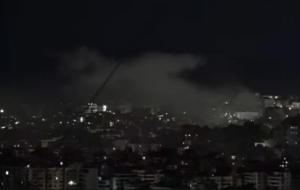
With the escalation between Washington and Tehran turning into an open war, Lebanon is no longer on the margins of the regional scene. During this confrontation, striking military indicators emerged, including a summons
Israel sent large numbers of reserve forces, in a move that was seen by military circles as a preparation that goes beyond the nature of the air and missile confrontation with Iran, and indicates broader field preparations for which Lebanon was one of the most prominent potential theaters.
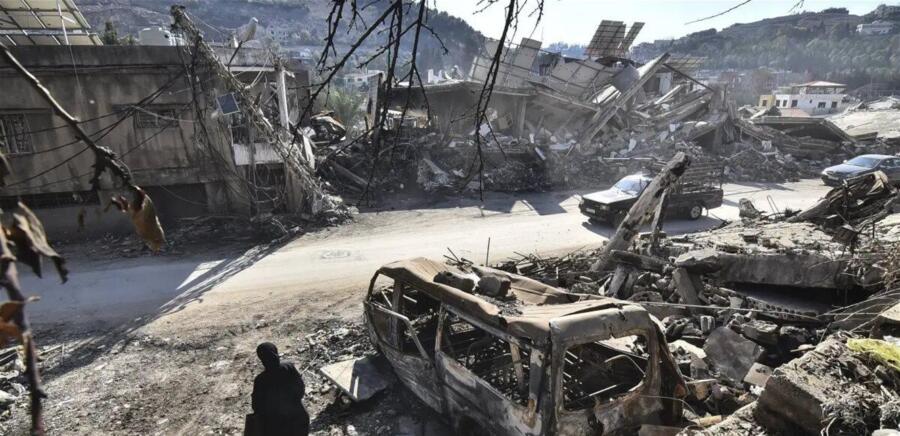
In this context, Hezbollah’s involvement in the confrontation alongside Iran came as part of an attempt to re-establish the deterrence equation that was damaged during the months that followed the announcement of the ceasefire. Since that agreement, the occupation forces have continued their attacks on the south, continuing with air violations and assassinations, while the “party” chose during that stage not to be drawn into broad responses, paving the way for the diplomatic path that was proposed to stop the Israeli attacks and oblige Israel to withdraw from the points where it remained stationed in southern Lebanon.
But subsequent months showed that this path did not achieve any tangible results. There has been no actual progress in establishing a ceasefire or stopping the seizure of Lebanese lands. Over time, the debate escalated internally about how to deal with this reality, especially with the increasing internal and international political pressures that increasingly focused on the issue of Hezbollah’s weapons.
After Hezbollah entered the confrontation with Israel, sensitivity intensified in Lebanon with the issuance of the government decision banning the party’s military activity, criminalizing it legally, and assigning the army and security services to implement it, in a move that some described as an attempt to reassert the authority of the state, while others saw it as a step that might carry great risks to internal stability, in light of the continuing confrontation with Israel and the absence of any real international guarantees to stop the attacks.
But what are the practical repercussions of this decision inside Lebanon?
Informed diplomatic sources believe that this decision places the country before a very complex equation. On the one hand, Hezbollah faces continuous Israeli military pressure that has not stopped since the announcement of the ceasefire, and on the other hand, it faces an official decision affecting its military structure and obligating state institutions to deal with it as a prohibited activity. Between these two paths, fears are rising that political tension will turn into a security path whose repercussions will be difficult to contain.
This reality also poses a very sensitive challenge to the military establishment. The sources believe that the army is based on delicate social and sectarian balances, and any internal confrontation with a party that has a broad political and popular presence may put this institution before a difficult test that affects its internal cohesion. Hence, the sources warn against pushing the political dispute towards an internal confrontation that may open the door to divisions that Lebanon cannot tolerate in light of the ongoing war.
In the background of this scene, the regional and international environment appears to be in a state of profound transformation. The traditional rules that governed international relations for decades gave way in the face of the rise of the logic of power and the redrawing of geopolitical balances. In this context, the sources believe that what is happening in the region goes beyond the limits of direct military confrontation, and has become part of a broader process to rearrange the balance of influence in the Middle East.
In parallel, the speech of the Secretary-General of Hezbollah, Sheikh Naeem Qassem, yesterday came to present the party’s version of events. He stressed that the latest escalation came as a result of what he described as a long series of Israeli attacks that lasted for more than fifteen months, noting that the “party” adhered during that period to the ceasefire agreement in coordination with the Lebanese state, while Israel continued its military operations.
He explained that the “party” chose during that stage to give a chance to the diplomatic path, avoiding responding to the attacks so as not to be accused of obstructing political efforts, but the continuation of the Israeli strikes and the absence of any tangible results for this path made this option reach its limits.
However, the essence of the debate in Lebanon today is not limited to explaining or justifying this confrontation, but rather goes beyond that to a deeper question related to the country’s path in light of this escalation. Between a gradually expanding regional war and escalating internal political pressures, Lebanon appears to be facing a sensitive crossroads that is testing the ability of its institutions to manage internal balances without sliding into an internal conflict.
In the end, turning the political debate into an internal conflict will not change the course of the confrontation in the region, but it may drag Lebanon into an additional cost that it cannot bear. When the dispute moves from the framework of political debate to a confrontation between the Lebanese themselves, the issue is no longer linked only to the developments of the war raging around the country, but also to the repercussions that the internal division may have that will be difficult to contain later. Then the real danger becomes that the war imposed on Lebanon will turn into an internal crisis that exhausts the country from within, and gives Israel what it was unable to achieve on the field.
The post The war is expanding… Will Lebanon slide into an internal conflict? appeared first on 961today Lebanon Today.