A research team at Rice University has developed the “EyeDAR” device, which is a small radar sensor, approximately the size of an orange, that aims to improve the level of safety in autonomous vehicle technologies.
EyeDAR acts as a “second eye” for vehicles, providing reliable performance in difficult weather conditions where cameras and lidar often fail. The sensor is installed on light poles, uses radar to monitor traffic during fog, and then transmits this information directly to vehicles.
The device relies on a low-power radar that uses millimeter wave technology, giving self-driving cars a clearer and more accurate view of the road by providing them with basic data from the surrounding environment.
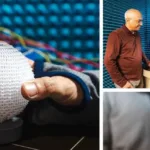
“EyeDAR is an example of what I call ‘analog computing,’ where the physical structure of the device is exploited to process information rather than relying solely on digital computing,” said postdoctoral researcher Kun Wu Zhou.
“3D Lüneberg Lens Design”
The secret to EyeDAR’s power lies in the Lönnberg 3D lens, manufactured using 3D printing technology, which mimics the human eye and contains more than 8,000 uniquely designed micro-elements. When the radar signal reaches the lens, the waves are automatically bent towards the focus point, allowing calculations to be performed more quickly and accurately.
EyeDAR sensors can be mounted on lampposts and traffic lights to form a safety net for cities, picking up missing signals that would normally scatter away from vehicles. It can also detect hidden hazards, such as pedestrians hidden behind trucks or cars approaching intersections, and send this data to autonomous vehicles in real time.
“High speed and accuracy”
EyeDAR is capable of processing radar data up to “200 times faster than traditional digital radars,” and combines sensing and communication in a power-efficient design, making it the first “talking sensor” of its kind.
Thanks to its innovation, low cost and small size, EyeDAR technology can enhance safety in cities, and could also be used in the future in drones, robots and wearable devices, to provide shared vision and improve safety in urban networks.