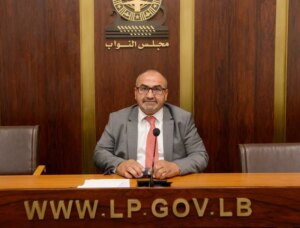
Representative Jamil Al-Sayyed stated on his account on the “X” platform, saying: “There was widespread Arab condemnation of the statement attributed to the US ambassador to Israel, in which he considered that Israel’s control over Arab countries was acceptable. Al-Sayyed believed that what was issued by the ambassador expresses the Israeli doctrine.”
Then the master asked a question: “What should we do?”
In his opinion, the main interest of the Arabs lies in the presence of opponents of Israel in the region to occupy it, because if it feels comfortable, it will, as he said, go to blackmailing them state after state.
This development comes in conjunction with a statement by US envoy Steve Witkoff, in which he stated that US President Donald Trump is “surprised that the Iranians have not surrendered,” despite the US military presence and movements in the region.
In a common political analysis, Trump’s position is viewed through the prism of the balance of power and military calculations, as his surprise at Iran’s lack of submission seems consistent with an approach that relies on the strength of military and political pressure. On the other hand, Tehran, according to this analysis, relies on a different balance related to belief and religion, and believes that “God is greatest,” which explains its adherence to its position despite the escalation.
This analysis concludes that war, if it breaks out, will not be in the interest of either party, given the regional complexities and the magnitude of the potential consequences.