Bob Harward, former Deputy Commander of Central Command in the US Army, revealed Washington’s most important military priorities inside Iran in the event of a military conflict, explaining an arrangement of targets that begins with missiles and ends with the leadership of the Iranian Revolutionary Guard.
Speaking to CNN, Harward stated that the primary goals, in order of priority, are:
First: Iranian missiles, considering them “the most powerful weapon of influence.”
Second: Protecting the Strait of Hormuz and neutralizing Tehran’s ability to plant mines and threaten oil shipping traffic.
Third: Targeting the sites, bases, and leadership of the Revolutionary Guard “responsible for repression.”
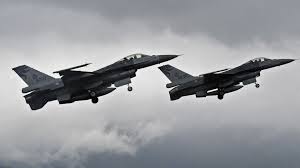
He pointed out that carrying out the strikes “all at once” depends on the Iranian reaction, stressing that modern American capabilities “allow for the delivery of huge quantities of ammunition in record time.”
Regarding regime change, Harward explained that military force “should support the Iranian people,” believing that military pressure could have an effect if it coincided with internal change.
He claimed that the regime “killed more Iranians than during the Iran-Iraq war,” pointing to the extent of internal repression.
These statements come in the context of a parallel political escalation, after US President Donald Trump announced that he had given Tehran a 15-day deadline to reach an agreement.
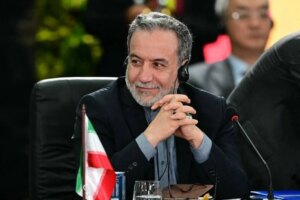
It is noteworthy that Geneva hosted a round of nuclear negotiations last Tuesday, and the Iranian delegation was headed by Foreign Minister Abbas Araqchi, while the American delegation was led by Steve Witkoff.
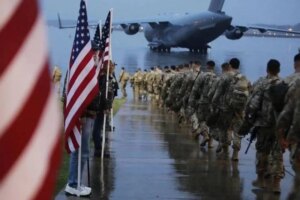
Witkoff stressed that the “red line” for Washington is Iran’s complete abandonment of uranium enrichment, noting Trump’s astonishment at “Tehran’s unwillingness to surrender despite pressure” and the deployment of American forces in the Middle East.
He also revealed that he met with the son of the former Shah of Iran, Reza Pahlavi, at the direction of Trump, explaining that the current path is “an American presidential policy, not a program for opposition figures.”