Reuters quoted eleven sources on Saturday that Cuban security advisors and doctors began leaving Venezuela under the weight of great pressure exerted by the United States on the government of Acting President Delcy Rodriguez. These pressures aim to dismantle the most prominent leftist coalition in Latin America.
A source close to the ruling party in Venezuela reported that the Cubans “are leaving on orders from Rodriguez as a result of American pressure.” However, other sources did not clarify whether the new Venezuelan leadership has forced the Cubans to leave, are leaving voluntarily, or whether Cuba has summoned them to return, according to Reuters.
The sources explained that Rodriguez entrusted the task of protecting her to Venezuelan bodyguards, unlike former President Nicolas Maduro and his predecessor, the late Hugo Chavez, who relied on elite Cuban forces. A former Venezuelan intelligence official also stated that some Cuban advisors were relieved of their positions within the military intelligence service.
Two sources said that a number of Cuban medical personnel and security advisers have flown back to Cuba over the past few weeks. On the other hand, the sources indicated that others are still working inside Venezuela, and that many Cuban doctors continue to provide medical care.
In addition, four informed sources reported that some Cuban military advisers are still working in Venezuela, while Cuban professors continue to teach at the College of Police and Security Forces, according to a former policeman.
In this context, an informed American source reported that despite the decrease in the Cuban presence, some secret intelligence agents are likely to remain to monitor the development of the political scene. Frank Mora, who served as the US ambassador to the Organization of American States during the administration of former President Joe Biden, said that Rodriguez “is being very cautious,” explaining that she “wants to move away from the Cubans temporarily until the situation calms down and her grip on power is tightened, without abandoning them completely.”
For his part, John Bulga-Hesimovic, a professor at the US Naval Academy in Maryland, said that the legacy of the Cuban military intelligence service is still present in Caracas, where senior Maduro loyalists are still in positions of power. He added that the Cubans “did not succeed in protecting Maduro, but they played a pivotal role in keeping the socialist government in power.”
Reuters reports that thousands of Cuban doctors, nurses, and sports coaches worked in Venezuela as part of the social welfare programs launched by Chavez, in exchange for Venezuela supplying Cuba with oil. However, following the US aggression against Venezuela in early January, US President Donald Trump pledged to end security relations between Venezuela and Cuba.
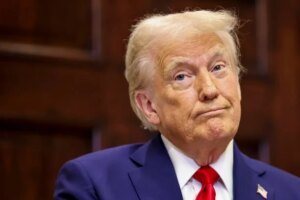
Trump said at the time: “Cuba lived for many years on huge amounts of oil and money from Venezuela, and in return it provided security services there, but this will not continue.”
On the other hand, Reuters indicates that Rodriguez, an ally of Maduro for years and a member of the ruling Socialist Party, enjoys close relations with the Cuban government. On January 8, she appeared alongside Cuban Foreign Minister Bruno Rodríguez during a memorial service in Caracas for the victims of the American attack, where the minister affirmed Cuba’s “strong solidarity” and echoed Ernesto Che Guevara’s slogan: “Always until victory.”
Later, Rodriguez spoke by phone with Cuban President Miguel Diaz-Canel, stressing that the two countries remain “united,” while Diaz-Canel stressed Havana’s commitment to “strengthening historic relations of brotherhood and cooperation.”
In response to questions about American pressure to cut ties with Cuba, a White House official said that Washington has a “very good relationship” with Venezuelan leaders, and believes that Rodriguez’s interests intersect with American goals. He added that the United States is “holding talks with Cuba” and that severing relations between Caracas and Havana is part of a broader strategy, noting that Washington imposed an oil blockade in mid-December to prevent sending oil to Cuba.
On the other hand, the Cuban government announced that it was open to dialogue on the basis of equality, denouncing the oil blockade and affirming its rejection of any American intervention.
Since the turn of the millennium, the Cuban-Venezuelan partnership has been a pillar of leftist alliances in Latin America, exchanging oil for health and security services. However, the recent political transformations in Caracas and the intensification of American pressure have reopened the file of this alliance, amid questions about the limits of continued Cuban influence and how to reposition Venezuela regionally and internationally.