US President Donald Trump and the White House, especially on Wednesday afternoon Washington time, deliberately leaked information that US forces would be ready within days, and Trump repeated this on Thursday, without the US administration explicitly clarifying what specifically the United States wants from Iran.
Senior officials in the US administration focused on the fact that Trump “does not want any Iranian enrichment of uranium,” while others spoke about Iran’s missile capabilities, which reflects the existence of multiple models for a solution between Washington and Tehran.
An American official told Al Arabiya and Al Hadath that the United States considers that “the Iranian regime poses many threats to regional stability,” adding that “Iran threatens security in the region and is a sponsor of terrorism in the world.” He explained that the terms of the problem between Tehran and Washington start from the nuclear program, through the missile program, all the way to the establishment and sponsorship of militias in Middle Eastern countries.
American officials confirmed that they have made, and are still making, great efforts to confront what they described as Iran’s destabilizing actions, considering that they constitute a direct threat to the security and safety of American soldiers deployed in the region, as well as a threat to its stability.
The US administration is moving within an “undeclared” strategy aimed at eliminating the “Iranian threat,” using what it describes as “diplomacy in light of the military threat.” Washington has applied this approach in previous cases, including Venezuela and the regime of Iraqi President Saddam Hussein, where it most often ended in the use of military force instead of reaching settlements.
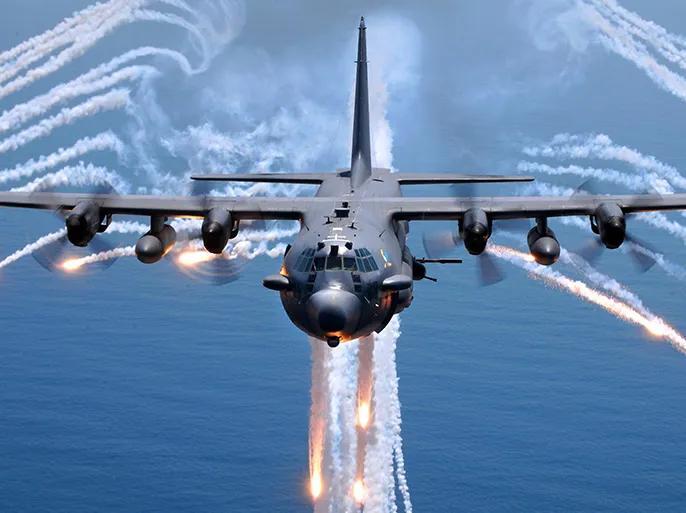
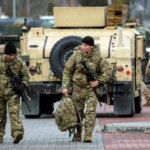
With the mobilization of large American air and naval forces in the Middle East, and the ability of the United States to send strategic bombers from its territory, Trump can launch an air strike on dozens of Iranian sites for hours, in parallel with strengthening missile defense systems to protect American forces and interests in the region.
During the past two weeks, Washington stressed the danger of the Iranian nuclear program, with striking nuclear facilities likely to be given priority. This option is affected by the size of the current US forces, in addition to the rapid monitoring of Iranian fortifications around these facilities after targeting them in June 2025, which pushes towards the possibility of a limited strike.
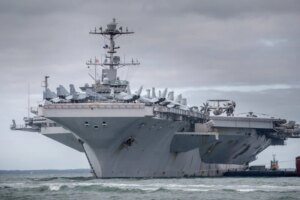
The arrival of the additional Ford aircraft carrier to the Central Command area of operations gives Trump the ability to carry out a broader and longer-term strike, which may affect Iranian infrastructure, especially nuclear facilities, missile stores and factories, in addition to the command and control points of the Iranian Revolutionary Guard and the army, leading to the imposition of a naval and economic blockade.
American officials confirm that the military operation against Iran is not “easy,” given Tehran’s possession of missile capabilities that can harm individuals and facilities in the region, despite the significant difference between it and advanced American military capabilities, which rely on advanced technology for command, control, and targeting.
A former official pointed out that the United States was previously able to carry out 40 or 50 strikes per day, but today it has the ability to carry out hundreds of strikes per day, which may change the equation.
The factor of pro-Iranian militias remains present in Washington’s calculations, as an American official confirmed that “Iran and its arms in the region threaten not only the United States but also partners and allies.” In this context, observers believe that Iran is not alone, as regional parties could become involved in any potential escalation.
In light of this scene, indications are increasing that the region may be facing a major transformation within days or weeks, amid repeated American assertion that “all options are on the table,” awaiting the outcome of the negotiations and field developments.