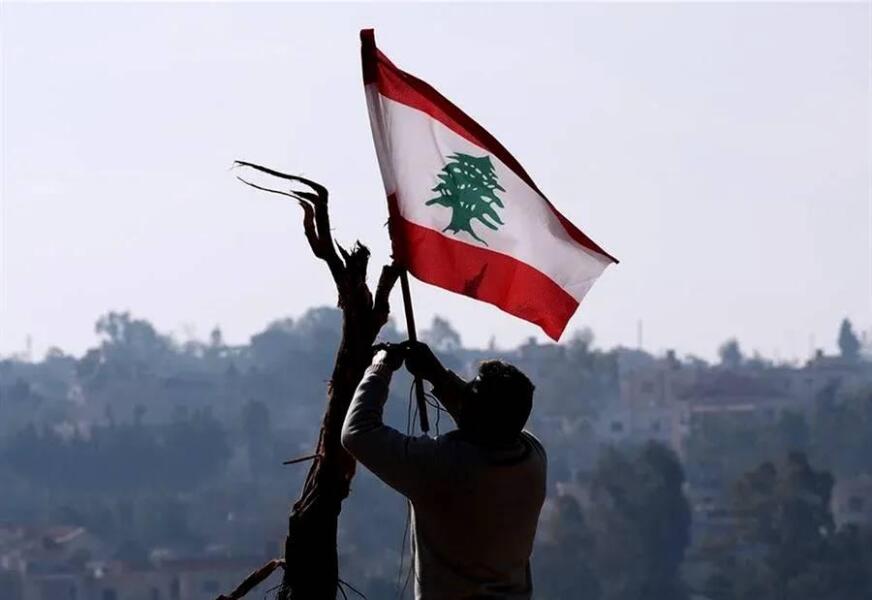
While the United States refers to “addressing limited Lebanese files” compared to what has been achieved in other regions, and with the escalation of regional tension, and the clear French push to support the military and security institutions, Lebanon faces a complex set of challenges: an international conference in Paris, a plan to restrict arms, a tense southern border, and a people suffering from increasing taxes, amid ambiguity surrounding the fate of the 2026 elections.
French President Emmanuel Macron invited President Joseph Aoun to co-chair the international conference in support of the Lebanese Army and Internal Security Forces, scheduled to be held in Paris on March 5, with the support of the United States, Saudi Arabia, Qatar, and Egypt as members of the “Five-Year Committee.”
The message conveyed by the French Ambassador to Beirut, Hervé Magro, confirmed that the conference aims to strengthen political, financial and technical support for security institutions at a stage described as “fragile”, especially with the approaching end of the UNIFIL mission in 2027. Paris believes that Aoun’s personal participation in the presidency of the conference carries a double political significance: confirming the historical partnership with Lebanon, and strengthening the presidency’s position as a reference in re-establishing the state’s authority and its monopoly on weapons.
According to the French vision, the conference will not be just a platform for declaring intentions, but rather an opportunity to define financial commitments spanning five years, allowing better coordination of aid and ensuring its effectiveness.
In parallel with the diplomatic moves, Speaker of Parliament Nabih Berri received in Ain al-Tineh President Saad Hariri. He also met with Army Commander General Rudolph Heikal, who presented the results of his visits to Washington and Riyadh and his participation in the Munich Security Conference, in addition to the ongoing preparations for the Paris Conference.
Berri also met with the Saudi Ambassador to Beirut, Walid Al-Bukhari, within the framework of following up on bilateral relations and political developments.
This comes after the Council of Ministers approved the second phase of the plan to restrict weapons to the state, which the army commander estimated would take between four and eight months to implement. This is a step that diplomatic sources consider a real test of the authority’s ability to translate its sovereign obligations in light of delicate internal balances. In the same context, the head of the Phalange Party, MP Sami Gemayel, stressed, during his meeting with MP Michel Daher, the importance of intensifying political coordination on this file.
On the ground, the south is still witnessing tension, in light of Israeli media reports of a state of alert on the northern border, against the backdrop of renewed tension between Washington and Tehran. This atmosphere comes at a time when Israeli operations continue in the south, which puts the situation before a delicate equation regarding the ability to achieve stability while the borders are subject to flammability at any moment.
Regarding parliamentary eligibility, Interior Minister Ahmed Al-Hajjar confirmed that the ministry is working “relentlessly” to hold the elections on time, indicating that only any amendment issued by the House of Representatives can stop the course of the elections.
However, political uncertainties remain, with estimates that postponement may become an option for logistical and security reasons. In this context, Representative Neama Avram held a press conference in which he presented questions that he would ask the government to clarify the course of the electoral process and ensure its transparency.
Socially, difficult living conditions are exacerbated by taxes, after the decision to raise the value-added tax and impose additional fees on gasoline led to igniting popular anger, with the public sector striking and unions threatening escalatory moves.
In this context, Finance Minister Yassine Jaber met with the Governor of the Bank of Lebanon, Karim Saied, to discuss pressing financial and social issues. On the other hand, Representative Michel Moawad criticized the decision, considering it “the worst thing the government has taken so far,” warning of its repercussions on the economy and citizens’ livelihoods, calling for making reforms, not taxes, a source of revenue.