International concern has increased sharply about the possibility of an imminent conflict between Washington and Tehran, against the backdrop of the recent US military escalation and the movement of large naval assets near the Iranian coast. These concerns come in light of warnings of “the window for diplomacy being closed” and official calls for international nationals to leave Iran immediately.
The international community agrees that the region is witnessing an unprecedented escalation that threatens to undermine the Geneva nuclear talks, at a time when military and political movements are increasing.
In this context, Rafael Grossi, Director-General of the International Atomic Energy Agency, warned that the US military movements practically mean that “the window for diplomacy has begun to close,” stressing that the lack of time represents the greatest challenge that may destroy the remarkable progress achieved in Geneva through Omani mediation.
Grossi explained that the dialogue began, for the first time, to develop by moving to discussing practical steps, indicating the readiness of the two parties to reach an agreement, but he described the task as very complex in light of the continuing acceleration of escalation indicators.
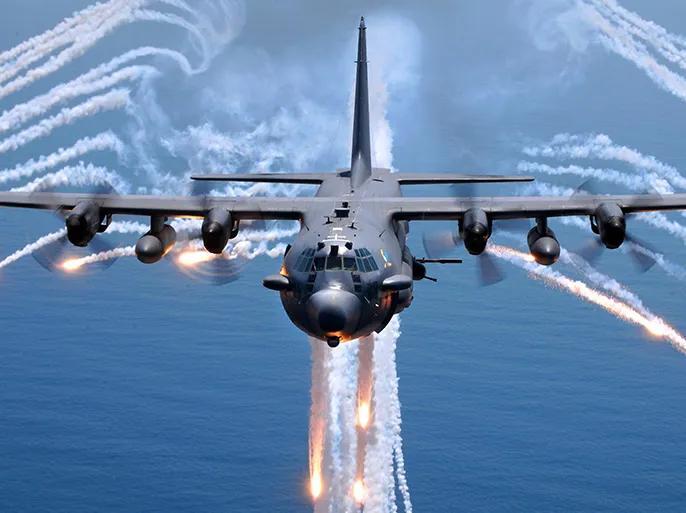
In Moscow, the Kremlin described the current escalation as “unprecedented” and called on both Tehran and Washington to exercise restraint and caution. While Russia criticized the transfer of US military assets to the region, a Russian warship conducted maneuvers with the Iranian Navy in the Gulf of Oman. Kremlin spokesman Dmitry Peskov confirmed that the maneuvers were planned in advance, and renewed the call to prefer political and diplomatic means to address the tension.
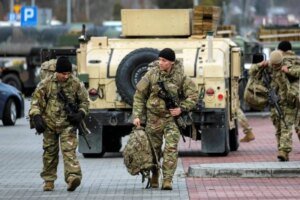
As for Poland, Prime Minister Donald Tusk urged his country’s citizens to leave Iran immediately, warning that any potential military escalation could make evacuations impossible within hours. Tusk stated on Thursday that all Poles must “leave Iran immediately,” demanding that they not go there under any circumstances.
On the other hand, the US administration kept all options on the table, as Vice President J.D. Vance stated that Washington was studying the feasibility of continuing on the diplomatic path in exchange for looking into “another option.” The White House confirmed this, noting that there were clear differences in Geneva, although limited progress had been achieved.
The repercussions of the escalation on the markets were not long in coming, as the main stock exchanges in the Gulf witnessed a decline during early trading on Thursday, as investors assessed the balance between US-Iranian diplomatic efforts to calm tensions, and the increasing military escalation on both sides.
Washington and Tehran had held a round of indirect negotiations in Geneva under the auspices of the Sultanate of Oman, at the conclusion of which Iran announced that a “set of guidelines” had been reached, while the United States confirmed that “many details still need discussion.”
Washington, along with Israel, accuses Tehran of seeking to produce nuclear weapons, while Iran asserts that its nuclear program is intended for peaceful purposes, while expressing its readiness to reach a new agreement that guarantees the non-production of nuclear weapons in exchange for lifting sanctions, after the United States withdrew from the 2015 agreement in 2018.