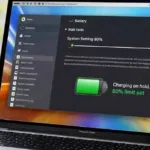
Apple announced the addition of a new feature in the beta version of the macOS Tahoe 26.4 operating system, allowing Mac users to set the battery charge level themselves. This step comes with the aim of improving battery life and increasing its efficiency in the long term.
The new feature, known as “Charge Limit,” comes years after it was available on iPhone and iPad. The user was able to set the maximum battery charge of between 80 and 100%, via a slider within the system settings.
How does this feature work? “Charge Limit” adds a new level of control over battery health, in addition to the Enhanced Charging feature previously found in macOS, which relies on learning user habits to delay reaching full charge until the appropriate time.
Unlike the enhanced charging feature, “Charge Limit” categorically prevents the device from exceeding the charging percentage specified by the user, such as choosing 80 or 90%, which reduces the chemical stress on the battery cells, and thus extends its lifespan.
To activate this new feature, users can head to the System Settings app, then the Battery section.
Continuously charging a lithium-ion battery to 100% is a concern for battery experts, because it accelerates the rate of corrosion compared to charging to lower levels.
So, allowing the user to control the charging limit allows them to reduce the stress on the battery during daily use, especially if devices are often used and are connected to the charger all the time.
Integrating this feature directly into the operating system reduces the potential need to rely on external applications to manage the charging process.
“A new threat targets Mac devices…malware that easily bypasses Apple’s defenses.”
The “Charge Limit” feature is not the only change in the 26.4 beta update. The update also includes the return of the tab bar in Safari after it was removed in previous versions, in addition to bug fixes and general system improvements.
Apple is expected to release the final version of macOS Tahoe 26.4 to users next spring, after a public testing period aimed at evaluating more features and improvements.