– Hassan Ajami
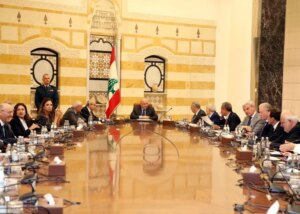
In the midst of the stifling economic crisis that the Lebanese are experiencing, the recent decisions of the Council of Ministers, namely raising the price of gasoline by 300,000 Lebanese pounds and increasing the value-added tax (“TVA”) to 12%, sparked a massive wave of dissatisfaction among citizens, especially public sector employees and retirees, who were directly affected by these increases.
While the government agreed to grant six additional salaries calculated on the basis of the original salary, it in fact financed these salaries from citizens’ funds, which sparked widespread anger and warnings of the possibility of an imminent social explosion.
In this context, Ibrahim Nahal, a member of the Public Administration Employees Association, expressed in an interview with, his strong rejection and condemnation of what happened, describing the policies followed as mere patchwork solutions with dire negative consequences, especially in this sensitive national and social circumstance.
Nahal stressed that the increase imposed on the price of gasoline by 300,000 liras and the raising of the value-added tax (“TVA”) to 12% are not merely temporary measures, but rather, from his point of view, reflect “blatant classist decisions that target the poor and limited-income groups, pit the employee against society, and push the country towards a new wave of high prices that may develop into a social explosion.”
He explained that any increase in the price of gasoline will inevitably affect the prices of transportation, goods, and services, while raising the value-added tax will affect all Lebanese families, especially basic daily needs, which constitutes an additional burden that people cannot bear.
He pointed out that the government, instead of moving towards imposing progressive taxes on rentier profits, or addressing the issue of sea and river properties and quarries, or recovering smuggled funds and holding major monopolists accountable, has once again chosen the easier path: holding workers, employees, and retirees responsible for the crisis and its costs, as if they were the ones who caused it.
Regarding the six additional salaries, Nahal explained that the employee whose basic salary is about 2.5 million liras will not receive an increase exceeding the equivalent of 150 to 160 dollars, an increase that will disappear quickly due to the rise in gasoline prices, taxes, and the high prices that will affect transportation, education, hospitalization, and all consumer goods, making restoring a normal life very difficult.
Nahal called on all public sector associations, civilians, military, and retirees, and all those affected, to unite their ranks to defend a living and social dignity, warning that silence today means accepting policies that will, as he put it, eliminate what remains of purchasing power, social guarantees, and a retirement system.
He stressed the trend towards organizing demand movements in the street, including sit-ins and demonstrations throughout Lebanon, with the participation of all those affected by the economic policies followed since 1992 until today, which he described as unjust policies based on deals and brokerages.
Nahal concluded his speech by emphasizing the rejection of any harm to the public sector or its privatization, and rejection of job contracts and the dictates of the World Bank and the International Monetary Fund, stressing that the current stage requires “one hand and one voice” to confront what he called the financial oligarchy, and to work to restore rights and gains and preserve the dignity of employees and their families.