:
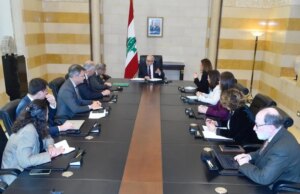
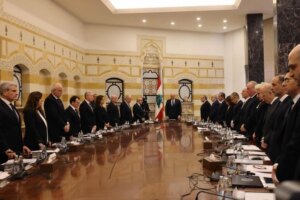
After a lengthy meeting that lasted more than seven hours in Baabda Palace, Information Minister Paul Morcos announced the decisions of the Council of Ministers, saying: “Following the collapse of residential buildings in Tripoli, His Excellency the President of the Republic, General Joseph Aoun, paused when this disaster coincided with the advent of the blessed season of fasting among the Christian denominations that follow the Western calendar, which is a spiritual time that carries meanings of repentance, renewal, and solidarity with the suffering and needy, and comes a few days before the advent of the blessed month of Ramadan, which in turn brings Values of patience, compassion, self-struggle, and doing good.”
He added, explaining that “President Aoun considered this coincidence not just a coincidence of time, but rather a profound message about the essence of Lebanon and its identity based on coexistence and respect for diversity, noting that what can be extracted from these two blessed fasts is the transcendence of selfishness, the primacy of the public interest, and the strengthening of the spirit of responsibility and solidarity among the people of one nation. He saw that this spiritual climate constitutes an opportunity for those responsible to derive additional strength to work sincerely and impartially, fortify national unity, and consolidate the values of justice and solidarity in a way that befits them.” With the sacrifices of the Lebanese and their aspirations for the establishment of a just and capable state, he expressed his hope that this blessed time will mark the beginning of the end of the pain and suffering of the Lebanese across all Lebanese lands.
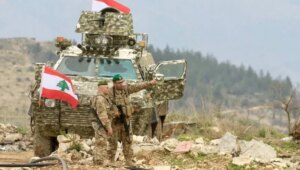
He continued: “President Aoun put the Council in the context of the meeting he had today with the German President, who confirmed his country’s continued support for the Lebanese Army, noting the active role that Germany played after the end of the work of UNIFIL forces. He also stressed that he asked the German President to intervene with the Israelis to implement the terms of the agreement reached in the year 2024, especially since Germany had effectively contributed to the success of the prisoner exchange negotiations in 2006.”
He added: “He touched on the reality of the city of Tripoli and its suffering, and the efforts made to meet the needs of its people, informing the Council that the Kingdom of Bahrain has sent 50 housing units equipped with solar panels, in addition to making contacts with the Kingdom of Saudi Arabia, Qatar, the Emirates, the Arab Fund for Economic and Social Development, the Abu Dhabi Fund for Development, the European Union, and other friendly and brotherly countries, with the aim of securing the greatest possible amount of aid. He also called for Strict standards for building construction, pointing out that a large number of old buildings lack the necessary quantities of iron, cement, and basic components to ensure their ability to withstand. He thanked all those who donated to help the people of Tripoli, pointing to a previous decision of the Council of Ministers that granted an extension to the stored aggregate companies, after these companies requested an extension until the end of next May, due to their inability to dispose of the stored quantities within the specified deadline. Accordingly, the Council of Ministers responded to the request and decided to extend Until the end of May 2026.”
He stated: “For his part, the Prime Minister confirmed that it was the first session after his visit to the south, and after the disaster that Tripoli witnessed as a result of the collapse of buildings and the fall of victims and wounded. He explained that he deliberately linked any visit to the south to the approval of the World Bank loan in the House of Representatives, so that the visit would not be just promises, but rather an entry point for launching specific projects related to infrastructure and others. He stressed that he sensed the longing of the citizens in the cities and villages he visited for the state to return to them, especially through concrete projects. stabilizing them in their land, stressing that the extension of state authority and sovereignty is not limited to the deployment of the army and security forces, but also includes the return of public institutions and reconstruction, such as schools, hospitals, the communications sector, and roads. He stressed that the visit to the south is not seasonal, but that the state has come to stay, and has begun weekly follow-up of all announced projects to see the stages of their implementation.
He continued: “President Salam followed up on the issue of the collapse of the last building in Tripoli, after his return from the south, and the subsequent attempts to hold the government responsible for what happened and to call for a vote of confidence in it. He explained that the government acted immediately, whether on the same night or the next day, and took immediate decisions, most notably the gradual evacuation of the buildings that pose a danger to citizens in no more than a month, and their number reached about 20 buildings out of 114, in addition to beginning to reinforce what can be reinforced and demolish what must be demolished.”
He pointed out that “a date was set to visit Tripoli with the start of the consolidation work, and as a result of the measures taken, no citizen remained on the street, as temporary shelters were provided for everyone immediately. The Relief Authority also began providing a shelter allowance for those who do not wish to move to the hotel school or other designated places, and accompanied the Minister of Social Affairs through the “Aman” program, and the Minister of Health by ensuring health coverage for the evacuees. He pointed out monitoring problems in the infrastructure of water and sewage that threaten an entire area, The Council for Development and Reconstruction was assigned to address the issue, with a daily report issued by the Disaster Management Unit addressing the seven points that were previously announced.”
He stressed that “the Council of Ministers reviewed its agenda, which consists of 30 items, and decided to take note of the Army Command’s presentation of the monthly report on the plan to restrict weapons in various Lebanese regions in implementation of Council of Ministers Resolution No. 1 of August 5, 2025 and the relevant decisions. It also approved a draft decree to grant monthly assistance to military personnel in active service and to retirees who benefit from a pension or retirement compensation. The Minister of the Interior also presented the request for consultation submitted to the Legislation and Consultation Authority and the result of the opinion issued by it, and the Prime Minister confirmed that The Council of Ministers stated that the fate of the 16th district rests with the House of Representatives, announcing at the same time that the parliamentary elections will be held on time.
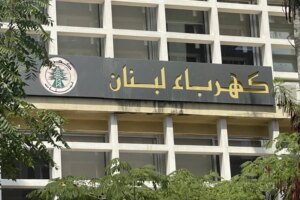
Regarding the appointments file, he added: “New members were appointed to the Board of Directors of the Electricité du Liban Corporation, and they are: Wassef Hanini, Nassib Nasr, Joel Al-Shukr, Hala Blues, Ali Berro, and Samer Hasnieh. Judge Wassim Abu Saad was also appointed head of a chamber at the Audit Bureau.”
Regarding the Lebanese University file, Morcos explained that “the Council of Ministers took note of the progress made in the study assigned to the Minister of Education, especially in the sabbatical file, according to the availability of contracts, the needs of the colleges, and a quorum for the last two years, provided that the sabbatical will be made in four batches according to the criteria of seniority, need, competence, and fairness, and the allocated amount is approved as of September 1, 2024, provided that the lists of names are presented in a later session.”