The Lebanese government has expressed its willingness to expand the scope of its participation in the United States-led UN force, which is responsible for monitoring the ceasefire between Israel and Hezbollah, in conjunction with intensified efforts to disarm the Iranian-backed party.
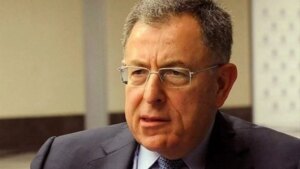
In an interview with Bloomberg Agency, Prime Minister Nawaf Salam stated the possibility of increasing the number of Lebanese civilian experts in the monitoring committee “when needed,” indicating the possibility of using “lawyers and surveying experts” to provide advice on the border demarcation file and other outstanding issues between Israel and Lebanon, which do not have official diplomatic relations.
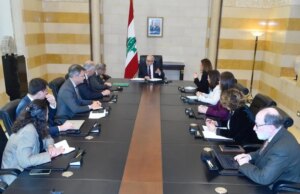
Salam indicated that on Monday he would review the next phase of the Lebanese army’s plan to disarm the south of the country, where Hezbollah consolidated its influence for decades, until Israel killed a number of its leaders in late 2024.
During the activities of the Munich Security Conference, which concluded on Sunday, Salam stressed: “We do not seek a confrontation with Hezbollah, but we will not be intimidated by anyone.” On the other hand, Hezbollah, which is classified as a terrorist organization by the United States and other countries, confirms that it will not give up its weapons.
Salam’s government faces a major challenge as it seeks to impose state authority in Lebanon, a country with a population of about 6 million people and about the size of the US state of Connecticut, which has long been an arena for a proxy conflict between major regional powers.
The American-backed ceasefire between Israel and Hezbollah is supervised by what is known as the “Mechanism Committee,” which was established in November 2024 and includes representatives of Israel, Lebanon, France, and a United Nations peacekeeping force.
This committee was established in the wake of a comprehensive war that lasted nearly three months, which witnessed the incursion of Israeli forces into southern Lebanon, and resulted in thousands of deaths, most of them Lebanese, including the historic Secretary-General of Hezbollah, Hassan Nasrallah. The war broke out after months of missile attacks and drone attacks carried out by Hezbollah against Israel in solidarity with Hamas in Gaza.
Although the truce officially continues, Israel continues to carry out strikes that it says target Hezbollah members and sites. Israeli officials and some officials in the US government accuse the Lebanese army of not making sufficient efforts to dismantle the party’s capabilities, considering that it is rebuilding its arsenal with Iranian support.
On the other hand, the Lebanese government says that Israel killed about 400 people, most of them civilians, and that its refusal to withdraw from five sites inside Lebanese territory complicates local efforts aimed at disarming Hezbollah.
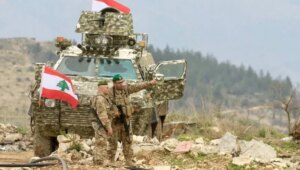
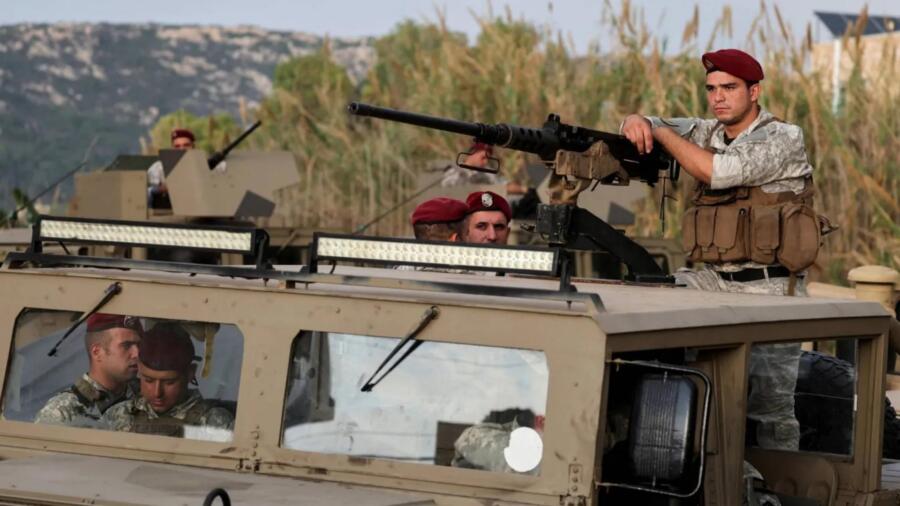
Last month, the Lebanese army announced that the area between the Litani River and the border with Israel had been cleared of weapons, where Hezbollah had built extensive infrastructure. The next phase focuses on the areas extending north to the Awali River, which includes Palestinian camps where Hamas has a presence.
In Washington, some officials are pushing for direct talks between Lebanon and Israel, with the aim of normalizing relations between the two countries, which have been in an official state of war since the establishment of the State of Israel in 1948.
In December, Lebanon appointed former Ambassador to the United States Simon Karam as its representative on the Ceasefire Committee, and he held talks with Uri Reznick, an official in the Israeli National Security Council, in the presence of American officials.
Salam was keen to distinguish between the current discussions related to security and borders and any step towards a permanent peace agreement, saying: “We did this before, when we negotiated the definition of maritime borders,” referring to the American-guaranteed agreement in 2022, adding: “We have no problem, the matter is not taboo.”