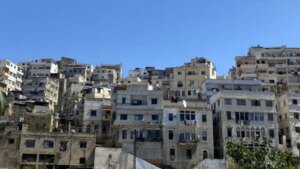
No sooner had the Lebanese people recovered from the tragedy of the building collapse in Tripoli, than dangerous data began to emerge about the presence of a large number of collapsed buildings in various areas, which raises grave concern for the safety of thousands of residents, and brings to mind the danger of the tragedy recurring at any moment and without warning.
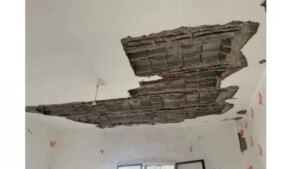
Information indicates that the problem is not limited to a specific city or region, but rather extends to many Lebanese regions, and includes old and damaged buildings in densely populated neighborhoods. Some of these buildings suffer from visible cracks in the walls and ceilings, and collapse in the foundations, while residents complain that repeated complaints are ignored and there are no serious solutions that reduce the risk of collapse.
While the legal and technical responsibility falls on the owners, who must maintain and restore their buildings, this duty faces great financial difficulties, as the low rents imposed on many of these buildings for decades are not sufficient to cover the minimum restoration costs.
In this context, responsibility is divided between municipalities and the official authorities concerned with building regulation and public safety. What is required is to launch a national emergency plan that begins with a comprehensive and transparent engineering survey, then identifies the most dangerous buildings and evacuates them immediately when necessary, all the way to developing a mechanism to support those affected to prevent preventive measures from turning into an additional social crisis.
For his part, a source from the Owners Syndicate who is following the file revealed in an interview with , that there are three threatened buildings, “one in Ain Al-Mreisseh, another in Achrafieh, and a third in Dekwaneh.”
He explained that the income of the building in Ain Al-Mreisseh “does not exceed $174 per year, or about $14.5 per month, for 15 apartments and rented shops,” wondering: “How can an owner renovate or maintain an entire building with this income?”
The source pointed out, “The cost of restoration, even partial repair, has become very high, as a simple restoration of one apartment may require no less than $50 for the dirt alone, without taking into account the rest of the materials and labor,” adding that “some restoration work has cost owners approximately $10,000 per apartment.”
He concluded by pointing out the glaring contradiction in the rental issue, saying: “Is there a greater force majeure than a landlord who receives a rent that does not exceed a few dollars a year, in an area like Achrafieh, where the common rent is no less than 700 or 800 dollars a month and he cannot afford to renovate or repair?”
After the Tripoli tragedy, it was no longer just an isolated incident, but rather a clear warning that the issue of dilapidated buildings had turned into an ongoing national crisis. Between the warnings of experts and the screams of residents, the question remains: Do we wait for a new collapse to occur until officials take action, or will a proactive approach be adopted to stop the countdown before it is too late?