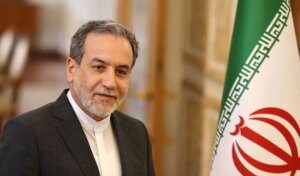
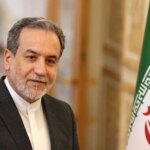
Iranian Foreign Minister Abbas Araqchi explained that his country believes that a diplomatic solution is the only way to resolve the dispute with the United States, but at the same time it is prepared for any possible military confrontation, including targeting American interests and bases in the region.
In an interview with the Russian RT channel from the capital, Tehran, Araqchi stressed that “there is no solution other than the diplomatic solution,” believing that scientific and technological progress cannot be destroyed through bombing or military threats. He pointed out that the constant threats have deepened the state of mistrust between Tehran and Washington, and revealed that the United States made a decision last June, during a round of talks, to launch an attack on Iran, describing this matter as a “very bad experience” for his country.
Regarding the nuclear program, Araqchi stated that it is intended for peaceful uses only and falls within Iran’s sovereign rights. He added that enrichment levels depend on civilian needs, with electrical reactors requiring less than 5%, while the Tehran Research Reactor, built before the 1979 revolution, uses 20% enriched fuel to produce medical isotopes to treat cancer. He stressed that the nature of the program is the basis, not the numbers, declaring Iran’s readiness to provide guarantees not to seek to possess nuclear weapons, provided that there is “good faith” from all parties.
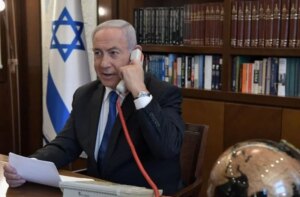
On the other hand, Araqchi categorically refused to include Iran’s ballistic missile program or regional alliances in any negotiations, stressing that the dialogue with Washington would be limited to the nuclear file only. He strongly criticized Israeli Prime Minister Benjamin Netanyahu, describing him as a “war inciter” seeking to drag the United States into a broader confrontation with Tehran. He warned that any new attack on Iran would be met with a direct response by targeting American sites and bases in the region.
These statements come in light of reports indicating that Netanyahu intends to demand that US President Donald Trump include any agreement with Tehran that includes a complete halt to uranium enrichment, getting rid of existing stockpiles, ending the missile program, and stopping support for regional militias.
Despite this escalation, Araqchi indicated that his recent contacts with American officials showed a desire to avoid war, stressing that Iranian military preparedness has improved quantitatively and qualitatively since the Israeli-American strikes last year. He added: “We have learned our lessons in war and diplomacy, and we are ready for both,” considering that the responsibility now falls on Washington to provide guarantees that military action will not be repeated during the negotiations.
In the same context, reports stated that Trump is considering sending a second aircraft carrier to the Middle East to reinforce the forces in the region, which include dozens of aircraft and about a dozen warships. “Either we will make a deal, or we will have to do something very tough like we did last time,” Trump said in an interview with Axios, referring to the air strikes that targeted Iranian nuclear sites last June. The White House spokeswoman confirmed that “all options are on the table.”
Inside Iran, the internal situation remains tense, with continued protests and tight security measures. Human rights organizations estimate that the recent crackdown led to thousands of deaths. Analysts believe that the regime, despite the pressure, will find it difficult to sign an agreement that could be interpreted internally as an additional concession that threatens its stability.
On the other hand, Iranian officials increased their tone. Secretary of the Supreme National Security Council, Ali Shamkhani, confirmed that any upcoming war will not remain limited geographically or between two parties only, and that Iranian missile capabilities are not negotiable. An advisor to the Revolutionary Guard also mocked the possibility of sending an additional aircraft carrier, considering that the United States is “defeated and incapable of aggression,” even if it sends a large number of naval vessels to the region.
At a time when political contacts are increasing and military warnings are escalating, the crisis between Tehran and Washington appears to be at a critical juncture: either returning to the negotiating table under new conditions, or sliding into a broader confrontation that may exceed the borders of both parties and extend to the entire region.