A Lebanese-Syrian meeting was held at the “Jdeidet Yabous” border point, devoted to discussing the issue of Lebanese trucks crossing into Syria. The Syrian delegation adhered to the regulatory decision regarding the entry of trucks, and stressed that it is a final decision that cannot be undone, and that it applies to all Arab countries, including Jordan and Lebanon. They added that work will be done later on developing a new mechanism to regulate this sector.
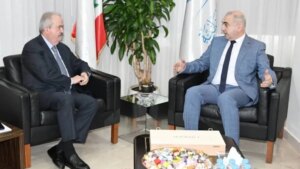
This statement came during a meeting held by the Director General of Land and Sea Transport, Dr. Ahmed Tamer, at the Jdeideh crossing at exactly eleven thirty in the morning, in the presence of officials from the transport sector, in addition to a delegation from the Syrian Ministry of Transport, in order to follow up on the repercussions of the recent Syrian decision regarding regulating the movement of Lebanese trucks within Syrian territory.
According to the available information, the Syrian side explained during the meeting that the current decision falls within a comprehensive regulatory policy for land transport movement, and does not specifically target Lebanon, but rather is part of a broader approach that includes many Arab countries, while emphasizing that the details of implementation mechanisms will be discussed later.
On the other hand, Lebanese truck owners in the “Al-Masnaa” area confirmed their continued closure of the road in protest against this decision, considering that its measures negatively affect the land transport sector and the export movement, and cause them direct losses in light of the current difficult economic conditions.
This meeting comes within the framework of an official move led by the Ministry of Public Works and Transport, with direct follow-up by Minister Fayez Rasamny, with the aim of keeping pace with new developments and coordinating with the Syrian side, to ensure the continuation of transit movement while taking into account the common interests of the two countries.
The Masnaa-Jdeidet Yabous crossing represents the main land artery for the movement of Lebanese exports to Syria and other Arab countries.
With the increase in Syrian regulatory measures in the recent period, protests by Lebanese truck owners escalated, amid fears of a disruption in exports and a decline in transport traffic, which led to the reopening of the Lebanese-Syrian coordination file regarding the mechanisms and conditions of land transit.