:
Fears have once again reared their heads in the Bourj Hammoud – Doura area, against the backdrop of news circulating about the establishment of new tanks dedicated to storing gas and petroleum derivatives, which belong to an oil company. The matter becomes more dangerous because this construction is taking place within a residential area that is considered among the most densely populated areas in Lebanon. This situation has raised great concern and widespread objection among the people, especially in light of the heavy memory of the explosive disasters that Lebanon witnessed previously.
In this context, a number of protesters carried out a protest in front of the gas storage facilities of the “Coral” company in Bourj Hammoud, expressing their rejection of what they described as serious violations related to the establishment and expansion of hazardous materials storage facilities in a crowded residential area. The protesters raised serious questions about the extent of the relevant companies’ compliance with applicable laws and decrees, especially after the Beirut Port explosion disaster and its shocking impact on the national level, in addition to the growing awareness of the dangers of negligence and leniency in applying safety standards.
Reporter: Protesters began arriving in front of Coral Company’s tanks in Bourj Hammoud, rejecting violations in liquefied gas storage facilities pic.twitter.com/IxlF7HYSUJ — Lebanon Debate (@lebanondebate) February 4, 2026
In this regard, lawyer Ahmed Abbas, one of the participants in the protest, explained in an interview with , that this movement expresses the position of the people, noting that the protest was carried out spontaneously as a result of a general feeling among the residents that what is happening is “illogical.”
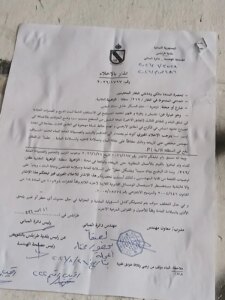
He said: The companies concerned claim to adhere to public safety standards, but a review of the laws and correspondence addressed to the relevant ministries showed, according to him, “a flagrant violation of the region’s directive risk decree.”
Abbas pointed out, “This decree prohibits the establishment of new large facilities in the region, and only allows existing companies to remain temporarily until alternative locations are found, not expansion or construction of additional large reservoirs.”
He also drew attention to the environmental impact file, explaining that since 2012 no study has been conducted to assess the environmental impact, nor has any approval been obtained from the Ministry of Environment, even though the proposed project is considered one of the huge projects with high risks.
He stressed that these violations, from his point of view, raise serious questions about the reasons for continuing to complete work inside these facilities, despite what Lebanon witnessed from the Beirut Port explosion, and the preceding Doura explosion incident, in addition to the fragile security situation that makes the country vulnerable at any moment to a military or natural disaster.
Abbas stressed that “what is happening does not take into account the safety of people,” considering that “profit considerations override the security of citizens, not only in Bourj Hammoud, but in Beirut as a whole, given the sensitivity of the site and the fact that it is a public road through which commercial establishments and citizens pass daily.”
He added that the current pause is considered a first step, and that the legal process has already begun, but the slowness of the judiciary in Lebanon requires, as he put it, raising our voice and taking to the ground to show the extent of the existing danger. He called on all the people of Bourj Hammoud and Beirut to participate in the movements, “if they are afraid for their children as we are afraid for our children,” to prevent the implementation of these projects.
He concluded by warning that “any potential catastrophe will be faced with the same scenario of evading responsibility,” stressing that the concerned authorities “know exactly the extent of the danger,” and that placing such facilities in the heart of residential neighborhoods is like, as he described, “a time bomb on the outskirts of the people,” holding responsibility to all levels concerned, from the top of the pyramid to the lowest party responsible for the presence of these facilities in the area.
The post “Time bomb” in the middle of residential neighborhoods… Residents’ dissatisfaction and fear of a disaster appeared first on 961today Lebanon Today.