October 19, 2026

Fears are rising in the towns of southern Lebanon as the end of the United Nations Interim Forces in Lebanon (UNIFIL) mission approaches by the end of 2026, amid warnings of catastrophic repercussions of the departure of a force whose presence has been linked for decades to security, work, trade, and humanitarian services. The border town of Ebel al-Saqi is a stark example of the extent of this connection.
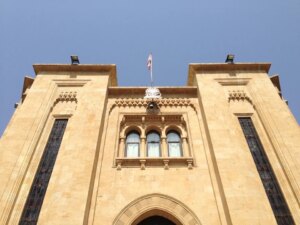
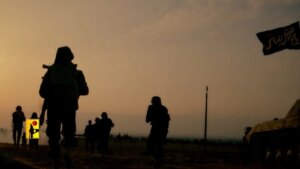
These fears come in the wake of the UN Security Council’s decision issued in August 2025 to end the mandate of the UN force by the end of 2026 under American pressure, at a time when the Lebanese government is demanding an extension of the mission, warning of serious security and economic repercussions on the south of the country, especially with the continuation of Israeli raids and operations despite the ceasefire agreement, and border areas remaining under occupation.
In the town of Ibel al-Saqi, UNIFIL’s presence went beyond the purely security aspect, to embrace profound social and economic dimensions. From his store, which was established with the support of the commercial movement created by peacekeepers, Mark Diab (59 years old) recalls memories of decades of work with the UN force, whose members constituted the majority of his customers. The ties even extended to include his sister’s marriage to a Spanish soldier and her move to Spain, stressing that the people and the UN force have become “one family.” These ties are evident in the town’s parks, where the flags of Norway and India fly, as well as cases of joint marriages and the formation of families.
On the economic level, local stakeholders face the specter of bankruptcy and no alternatives to livelihood. Khaled Nahra (48 years old), the owner of an embroidery shop for military products and insignia for about 25 years, relies mainly on his clients from UNIFIL, and warns that the force’s departure will threaten to close the shop and cut off the livelihood of more than 10 employees, some of whom have spent two decades working there without having an alternative.
For his part, the mayor of Ebel al-Saqi, George Rahhal, confirms that UNIFIL – which deployed in 1978 – contributed to enhancing the residents’ sense of security and provided vital medical and educational services. Although its departure was expected, the timing of the withdrawal raises grave concern in light of the field security conditions and the lack of capabilities of the Lebanese army, which has not yet completed its deployment in the south.
Rahhal warns that the direct and indirect impact of the withdrawal will affect the entire society, wondering who will be responsible for protecting the population in areas that have long suffered from the weak presence of state institutions.
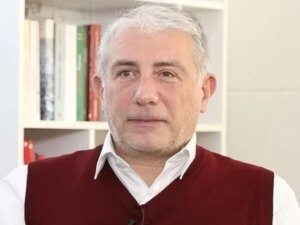
In the same context, the former UNIFIL spokesman for nearly two decades, Andrea Tenenti, explains that the UN force represented one of the largest sources of employment and economic activity, and its influence extended to include a wide network of institutions and sources of livelihood.
It should be noted that UNIFIL includes about 7,500 personnel from 50 countries, and about 400 Lebanese employees work with it, along with local companies with service contracts, which expands the scope of the economic repercussions. Thus, the departure of the force does not limit itself to ending the international presence in the south, but rather threatens the fate of sources of livelihood and deep-rooted social relations, leaving the towns of the border strip cautiously anticipating what the year 2027 will bring in terms of a security and social vacuum.