October 17, 2026

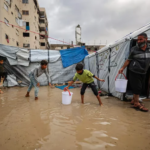
Coinciding with the continuing repercussions of the war and security tensions, the villages of Iqlim al-Tuffah in southern Lebanon are trying to restore their vitality by launching local projects, engaging in the agricultural sector, and continuing the work of removing rubble, at a time when the region provides a safe haven for hundreds of families displaced from the towns of the front edge.
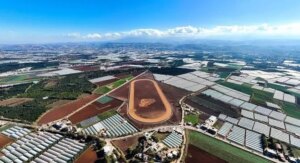
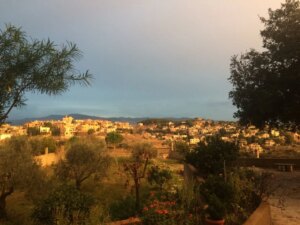
According to a report prepared by Al Jazeera correspondent Ali Rabah, Iqlim al-Tuffah – which includes about 20 towns extending from the borders of Nabatieh in the south to Jezzine in the north and the outskirts of Sidon in the west – hosts hundreds of families who fled from the border areas most vulnerable to targeting.
In this context, the head of the Union of Municipalities of Iqlim al-Tuffah, Yasser Madi, confirmed in an interview with Al Jazeera that the region includes about 426 displaced families who came from various southern regions, most notably Kafr Kila, Aitaroun, Khiam, and other towns on the front line.
To face the harshness of displacement, some residents resort to individual economic solutions. In the town of Kafr Melki, displaced people from Kafr Tibnit work on agricultural lands, especially in olive harvesting, to secure a daily income that helps them survive. One of the displaced families recounted their suffering with frequent movement between Al-Aqibiya and Sidon to settle in Iqlim Al-Tuffah, stressing that working on the land represents a lifeline in the face of displacement conditions.
In addition to hosting the displaced, Iqlim al-Tuffah bears traces of Israeli raids throughout, as efforts continue to remove the rubble of destroyed homes in search of alternative spaces to benefit from. In the town of Arabsalim, the municipality is undertaking a project to transform a rubble accumulation site into a public space. The mayor, Ali Hassan, explained to Al Jazeera that the project depends on investing in common land to create a park, playgrounds, and sports and cultural facilities, in an effort to transform scenes of destruction into spaces for life.
On the urban level, a number of residents have begun planning to rebuild their destroyed homes, either based on compensation or on their own expenses, despite the uncertainty surrounding the amount of expected aid. One of the residents confirmed his absolute determination to rebuild his house in the absence of compensation, an embodiment of the people’s commitment to remaining in their villages.
On the ground and politically, the situation in southern Lebanon remains hostage to security developments. Although Beirut and Tel Aviv signed an American-sponsored framework agreement on June 26, Israel continues its military operations that began on March 2.
The aforementioned agreement stipulates a gradual Israeli withdrawal from the occupied Lebanese territories in exchange for the deployment of the Lebanese army, as well as the disarmament of armed groups, in reference to “Hezbollah.” To complicate the scene, Israel still occupies large areas in the south, the origins of some of which go back decades and others to the wars of 2023 and 2024, in addition to its incursion to a distance of more than 10 kilometers during recent military operations.
Between sheltering 426 displaced families, removing rubble, and rebuilding efforts, Iqlim al-Tuffah is waging a daily battle of resilience to keep the lifeline beating in the face of destruction.