October 3, 2026

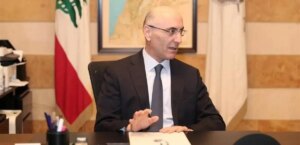
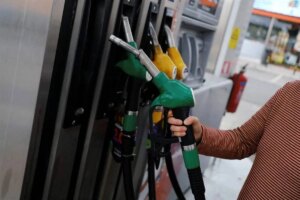
In its session held on Thursday, the Lebanese Council of Ministers approved amending the daily transportation allowance for workers to be calculated at the equivalent of five liters of gasoline per day, provided that it is not less than 500,000 liras and does not exceed a ceiling of 800,000 liras. The Council also agreed to open an additional credit worth 1.4508 trillion liras to support public drivers for a period of three months. This step, prepared by journalist Basma Atwi in a report published by “Lebanon Debate,” comes in an attempt to contain popular anger over the increasing living pressures, high rates of inflation and economic contraction, as well as the rise in global fuel prices as a result of the confrontation between the United States and Iran in the Strait of Hormuz.
Although these measures aim to mitigate the social shock, they raise serious questions about the ability of the public treasury to bear these obligations in the long term. The rise in fuel prices does not affect drivers alone, but rather quickly seeps into the costs of transportation, shipping, and production, all the way to the prices of all goods and services. It is noteworthy that the Ministry of Finance had previously agreed to grant eligible public drivers an amount of 12 million liras per month for the period extending from October 1 to December 31, 2026, provided that they adhere to the official tariff issued by the Ministry of Public Works and Transport on April 15, 2026, and under penalty of depriving violators of these entitlements.
Mathematically, experts believe that financing the additional credit amounting to 1.45 trillion liras for a period of three months is not impossible for the state, especially since public finances recorded an improvement during 2025 and the first half of 2026, achieving a total surplus amounting to 3.9 percent of the gross domestic product in 2025. However, the real challenge lies in transforming this temporary support into a sustainable commitment. If oil prices continue to rise, the state will find itself faced with the choice of either ending support or extending it and increasing its burdens, which threatens public finances, with the World Bank warning of increasing pressures during the second half of 2026 due to war and reconstruction needs, slowing revenue growth, and increasing public sector wages.
This coincides with worrying figures from the World Bank that expect the Lebanese economy to contract by 6.4 percent in 2026, after growth of 4.2 percent in 2025, and an increase in the inflation rate to 17.5 percent during the current year. This paradox – the contraction of the economy simultaneously with the rise in prices – creates double pressure on citizens and purchasing power. In this context, a ceiling was set for the transportation allowance at five liters, which means that the worker will bear the difference alone if the price of gasoline exceeds the ceiling of 800,000 liras. In addition, the decision does not address the high costs of food, electricity, and medicine.
In conclusion, observers believe that the current government measures constitute tools to absorb an immediate shock and are not a sustainable economic policy for transport and wages. The most prominent challenge remains the state’s ability to build a sustainable social protection network without wasting treasury resources, and avoiding the most important question: Who will bear the bill if the crisis lasts for a long time and prices continue to rise?